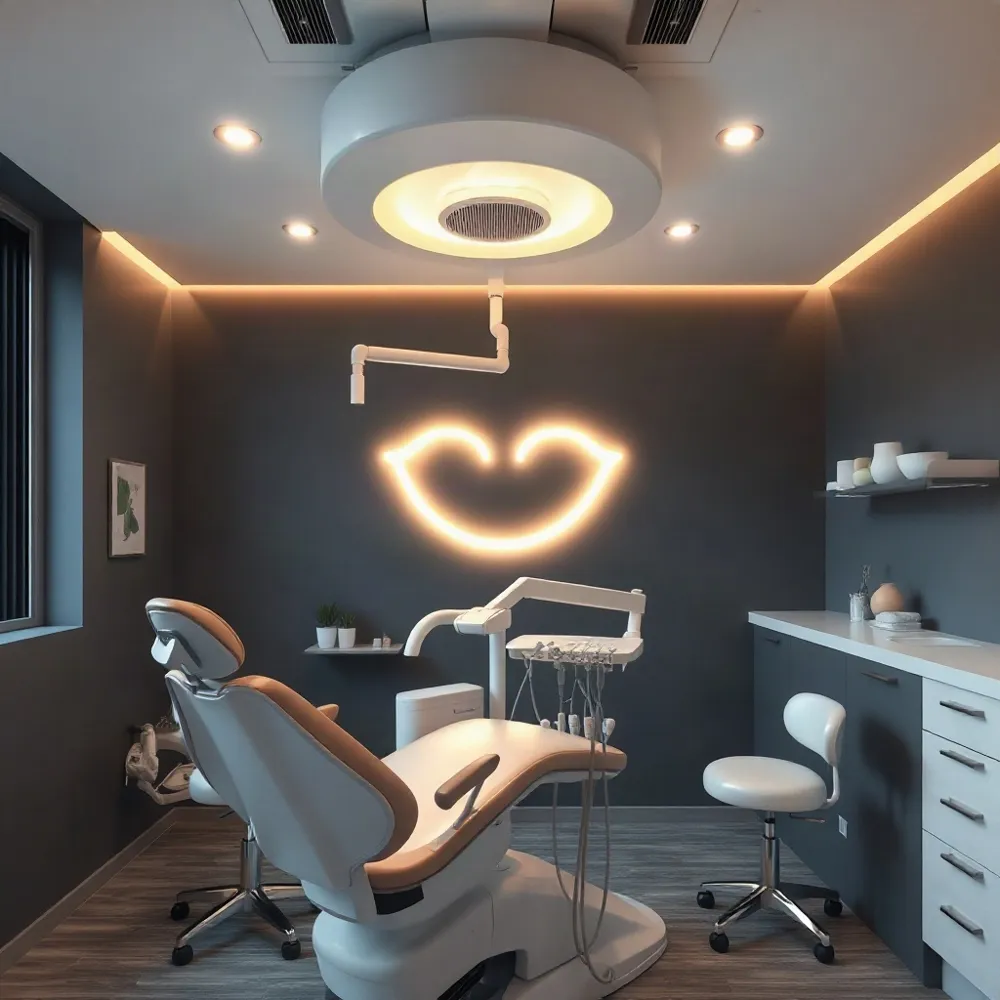
A New Era for Implant Dentistry
Digital intraoral scanners now replace traditional impression trays, capturing a precise 3‑D model of teeth and soft tissue in seconds without mess or gag reflex. The scanner’s high‑resolution data (20–30 µm accuracy) is merged with CBCT volumes, which reveal bone height, density and vital structures such as nerves and sinuses. This combined virtual model lets clinicians design implants, surgical guides and prosthetics in CAD software, achieving sub‑millimeter placement accuracy and reducing intra‑operative adjustments. For patients, the workflow means greater comfort, shorter appointments, same‑day provisional restorations and clearer visual communication of the treatment plan. Clinicians benefit from instant data, reduced chair‑time, fewer complications and streamlined lab collaboration.
Digital Foundations: Intraoral Scanners and CBCT Integration
High‑resolution intraoral scanners such as iTero capture a full‑arch 3‑D model of teeth and soft tissue in seconds, delivering spatial accuracy of 20–30 µm and eliminating messy impression materials. The STL file generated is merged with DICOM data from a cone‑beam CT (CBCT) scan, creating a single virtual environment that displays both surface anatomy and underlying bone, nerves, and sinuses. This integration enables clinicians to virtually position implants with micron‑level precision; studies report positional deviations <1 mm and angular errors <5°, which translates into more accurate surgical guide fabrication and fewer intra‑operative adjustments. Digital intraoral scanners capture a precise 3D image of a patient's teeth and gums, eliminating the need for traditional impression materials.
Digital technologies in implantology: a narrative review – Digital workflows combine 3‑D imaging, intra‑oral scanning, and CAD/CAM to produce prosthetically driven, computer‑guided implant placement that outperforms free‑hand techniques in accuracy, speed, and patient comfort. Digital workflow combines 3‑D imaging, intra‑oral scanning, and CAD/CAM to produce prosthetically driven, computer‑guided implant placement that outperforms free‑hand techniques in accuracy, speed, and patient comfort.
What are the benefits of the iTero scan? – The iTero scan provides a quick, painless, radiation‑free digital impression, instantly viewable on a monitor, which integrates seamlessly with CBCT data, reduces chair‑time, and improves fit of abutments and restorations. iTero scanner creates highly detailed 3D images of teeth and gums.
What does the implant planning setting do on my iTero? – The Implant Planning module guides the clinician through virtual implant positioning and the creation of patient‑specific surgical guides, streamlining the workflow from scan to surgery. The iTero digital workflow simplifies complex restorative treatments, integrates seamlessly with labs, and boosts patient satisfaction.
From Scan to Surgery: Guided Implant Placement
Digital intraoral scanners and CBCT imaging now provide a complete 3‑D virtual model of a patient’s dentition and bone. When merged in computer‑aided design software, the model drives computer‑guided surgery: a custom 3‑D‑printed surgical guide is fabricated that fits precisely over the teeth or gums and directs the drill to the planned depth, angle and position. Clinical studies consistently show that guided surgery achieves positional deviations of <1 mm and angular errors <5°, outperforming free‑hand placement by up to 0.5 mm and reducing intra‑operative complications such as nerve or sinus perforation.
The “3‑by‑2 rule” is a safety guideline that mandates at least 3 mm of bone height above the implant platform and a 2 mm circumferential bone margin around the implant to preserve vital structures and ensure primary stability. Digital workflows make it easy to verify these margins on the merged scan/CBCT model before surgery, and the surgical guide enforces them during placement.
What is the newest technology for dental implants? The latest advancement combines AI‑driven treatment planning with high‑resolution CBCT and intraoral scanning. AI algorithms analyze bone density, nerve locations and optimal prosthetic angles, then automatically generate a patient‑specific surgical guide that is 3‑D‑printed. This fully digital workflow shortens treatment time, enhances accuracy to sub‑millimeter levels, and predicts postoperative outcomes for personalized, minimally invasive implant therapy.
Patient Experience: Comfort, Eating, and Financing
Digital dentures and implant‑supported restorations dramatically improve daily life. Because the prosthesis is designed from a precise 3‑D scan, patients experience a snug, natural‑looking fit that allows them to chew with confidence. Early meals should focus on softer foods, gradually progressing to harder items as the denture settles; very hard, sticky, or chewy foods can still cause discomfort or damage. Good oral hygiene—rinsing and brushing after meals—maintains fit and longevity.
Insurance coverage for digital scanning is generally favorable when the scan is medically necessary. Most dental carriers reimburse iTero or other intraoral scans that are part of a treatment plan for crowns, implants, or orthodontics, often bundling the cost into the overall procedure claim. Purely cosmetic scans may not be covered, so patients should verify benefits and obtain pre‑authorizations when needed.
The cost of a 3‑D CBCT scan at V Dental ranges from $150 to $250, depending on case complexity. This fee typically includes a digital file and a brief report; additional copies may incur a small surcharge. Many insurance plans treat the CBCT as a diagnostic service, offering partial reimbursement. For larger implant cases, the scan cost can be incorporated into flexible financing options such as CareCredit, GreenSky, or Sunbit, making advanced digital diagnostics accessible while spreading payments over time.
Can patients eat with digital dentures? Yes—patients can eat with digital dentures, starting with softer foods and progressing to harder items as comfort improves. Proper cleaning after meals helps maintain fit.
Does insurance cover an iTero scan? Most plans cover an iTero scan when it is medically necessary for a treatment such as crowns, implants, or Invisalign, though coverage can vary by carrier.
How much does a 3D scan of your teeth cost? At V Dental a CBCT 3‑D scan typically costs $150‑$250, with possible insurance reimbursement and financing options available.
The iTero System: Features, Pricing, and Value
Digital dentistry has become the standard of care, and the iTero intraoral scanner family leads the market. iTero intraoral scanner price – the system typically costs between $20,000 and $50,000 USD, depending on model and configuration. Entry‑level iTero 5D units price around $23,000‑$36,000, while the upgraded 5D Plus series ranges from $42,000‑$48,000. The newest iTero Lumina scanner, featuring premium imaging, is listed between $45,000‑$50,000, with refurbished units available near $9,000. iTero Lumina intraoral scanner price – as above, new Lumina units sit in the $45,000‑$50,000 range, reflecting Multi‑Direct Capture™ technology, high‑definition 3‑D imaging, and seamless integration with Invisalign and CAD/CAM workflows.
Lumina premium features include Near‑Infrared Imaging for shade‑accurate models, faster 2‑3‑minute scans, and a mobile‑cart option that fits any operatory. The scanner’s software provides real‑time 3‑D visualization, AI‑assisted tissue removal, and instant data transfer to labs, cutting turnaround time by weeks.
Clinical advantages that justify the investment are evident: digital impressions eliminate messy trays, improve fit (marginal gaps <100 µm), enable same‑day surgical guide fabrication, and reduce chair‑time by up to 30 %. Guided surgery based on iTero data achieves positional deviations <0.5 mm and angular errors <5°, lowering intra‑operative complications and enhancing long‑term implant success. Patient comfort, faster treatment, and higher satisfaction make the iTero system a cost‑effective, future‑proof solution for modern implant practices.
Future Directions and Clinical Outcomes
Artificial intelligence is beginning to assist implant planning by automatically analyzing CBCT and intra‑oral scan data, suggesting optimal implant size, depth and angulation, and flagging risky anatomy. Early studies indicate that AI‑enhanced workflows can reduce planning time and improve positional accuracy, supporting the high survival rates already reported for digital guided implants—over 95 % at 20 years in recent meta‑analyses. Continued research focuses on refining AI algorithms, expanding cloud‑based data sharing, and developing patient‑centric tools such as real‑time visualizations that enhance understanding and consent. These innovations aim to further shorten treatment timelines, lower complications, and personalize long‑term maintenance strategies effectively.
Embracing Precision for Better Smiles
Digital intraoral scanners capture a high‑resolution 3‑D model of teeth and soft tissue in seconds, eliminating messy impression trays and the gag reflex while delivering micron‑level accuracy. When merged with cone‑beam CT data, the virtual model guides computer‑aided design and the fabrication of surgical guides that position implants within 0.5 mm and under 5° of angular error. This workflow shortens appointments, reduces intra‑operative adjustments, and improves patient comfort. V Dental in Live Oak, Texas, embraces iTero scanning, CBCT imaging, and CAD/CAM manufacturing to provide predictable, minimally invasive implant solutions. Discover how our digital implant options can give you a faster, more precise, and happier smile.