Why a Dental Emergency Plan Matters
Traveling with a sudden toothache or a knocked‑out tooth can turn a vacation into a medical crisis. Untreated dental pain not only robs you of enjoyment but can lead to infection, swelling, and even loss of the tooth pocket disrupting sleep, appetite, and overall health. A simple preparedness routine—pre‑trip check‑up, a compact first‑aid kit, and knowledge of local emergency resources—dramatically improves the odds of saving the tooth and controlling pain until professional care is reached. V Dental supports travelers by offering pre‑travel consultations, digital copies of records, and 24‑hour emergency guidance, plus tele‑dentistry referrals and a network of trusted dentists abroad, ensuring you’re never far from expert help.
Immediate First‑Aid Steps for Any Dental Emergency
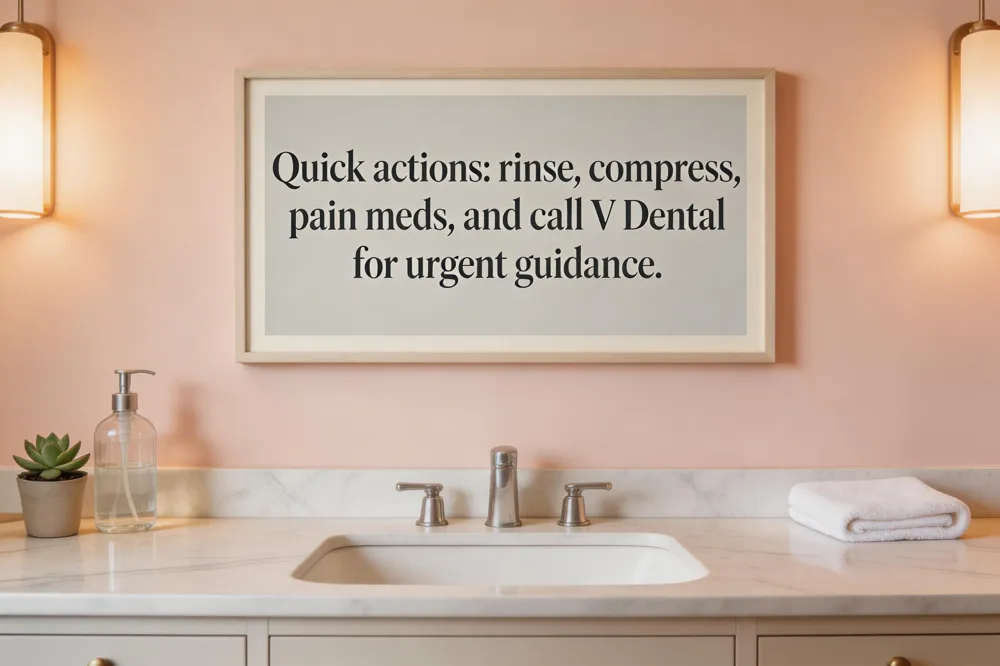 When a dental emergency strikes while you’re away, act quickly to protect the tooth and control pain.
Rinsing and debris removal – Swish warm water gently around the affected area and use floss or a soft brush to dislodge food particles; avoid scrubbing a broken tooth or knocked‑out tooth.
Cold compress and pain‑relief medication – Apply a cold pack to the cheek for 10‑15 minutes each hour to reduce swelling and numb pain. Take an over‑the‑counter anti‑inflammatory such as ibuprofen (200‑400 mg) or acetaminophen, following label directions.
When to seek urgent professional care – If bleeding is profuse, swelling spreads, a tooth is missing, or pain persists beyond 24 hours, locate the nearest emergency dentist or hospital. Contact V Dental (or your regular dentist) for a same‑day tele‑consultation or referral to a trusted local provider.
What to do if you have a dental emergency while traveling? Rinse, compress, medicate, then call V Dental for urgent guidance; seek emergency department care for severe bleeding, facial swelling, or a lost tooth.
How to deal with tooth pain on vacation? Warm‑water rinse, gentle floss, cold compress, OTC pain reliever, and temporary cement for loose crowns or fillings; call V Dental for tele‑consultation.
Toothache pain relief – Cold compress, warm salt‑water rinse, ibuprofen or acetaminophen, optional clove oil or cooled tea‑bag; if pain worsens or is accompanied by fever or difficulty chewing, contact V Dental promptly.
The 3‑3‑3 Rule vs. Evidence‑Based Oral Hygiene
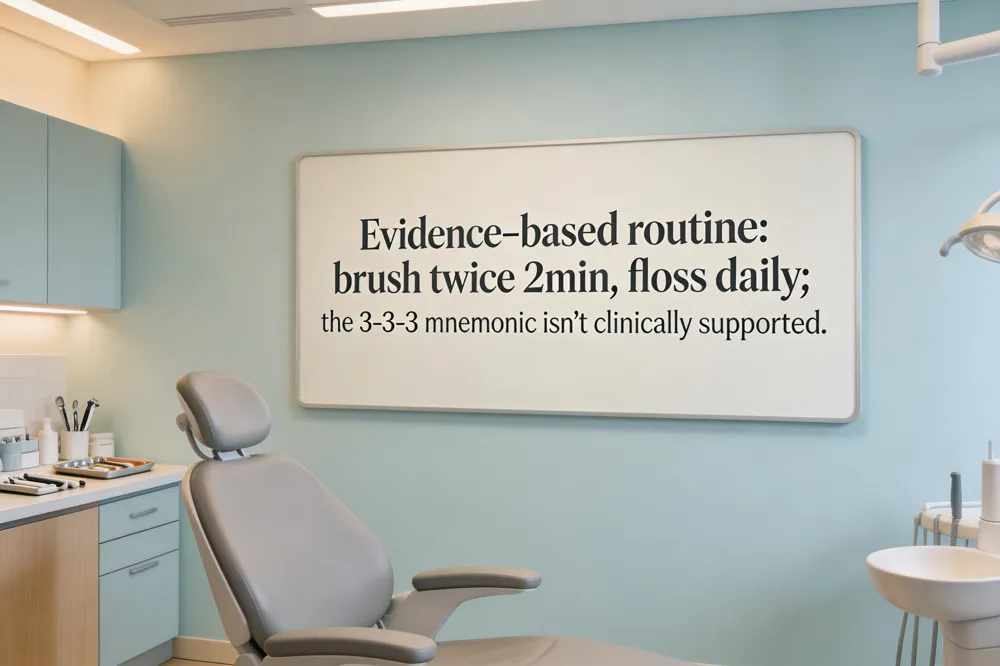 The popular "3‑3‑3 rule" suggests brushing three times a day for three minutes each and avoiding food for three hours before bedtime. It is a mnemonic, not an evidence‑based guideline; dental professionals recommend brushing twice a day for two full minutes with fluoride toothpaste, daily flossing, and regular check‑ups. Excessive brushing can damage enamel and gums, so an evidence‑based schedule is safer and more effective.
How to stop tooth pain fast – Rinse with warm salt water (½ tsp salt per cup of warm water) to reduce inflammation, apply a cold compress to the cheek for 10‑15 minutes each hour, and take an OTC pain reliever such as ibuprofen or acetaminophen. A dab of clove oil on a cotton swab can provide additional relief. Stick to soft foods, avoid chewing on the painful side, and seek urgent care.
V Dental’s technology – At V Dental in Live Oak, Texas, digital X‑rays, intra‑oral cameras, and CBCT 3‑D imaging allow precise diagnosis of cavities, gum disease, and trauma. These tools support the evidence‑based oral‑hygiene routine by detecting problems early, guiding personalized preventive care, and ensuring timely, minimally invasive treatment.
Temporary Fixes Until You Can See a Dentist
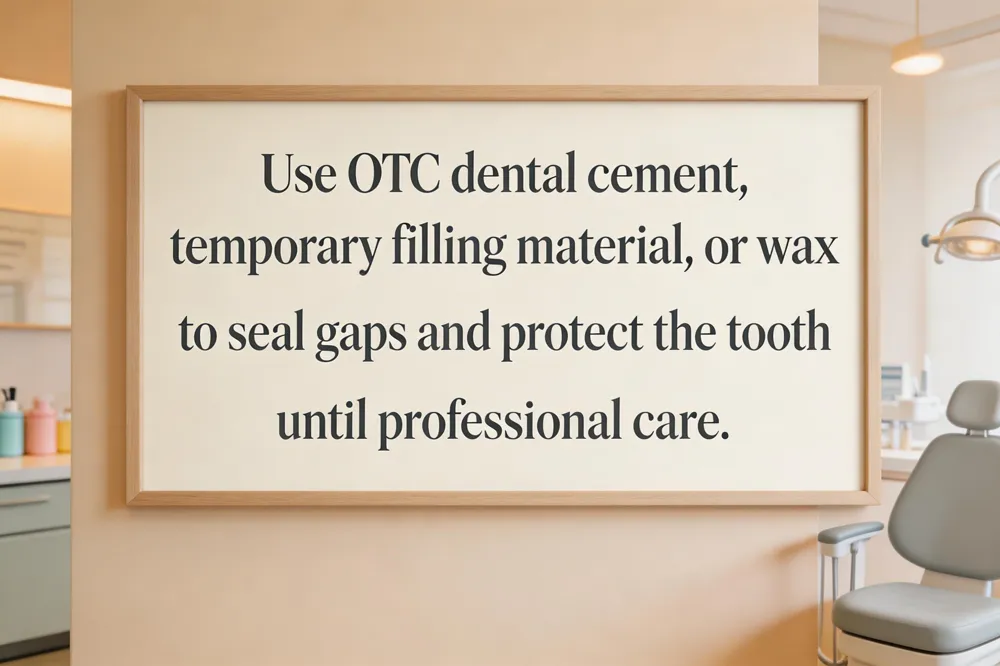 When a dental mishap occurs on vacation, a quick‑acting temporary repair can keep pain and infection at bay until a professional can see you.
Using dental cement, temporary filling material, and wax – Over‑the‑counter dental cement or a self‑hardening temporary filling (often a zinc‑oxide eugenol or glass‑ionomer mix) can seal a lost crown, broken filling, or exposed dentin. Apply a thin layer with a clean applicator, bite gently to hold it in place, and avoid chewing on that side. Dental wax works well for sharp edges of a broken tooth; roll the wax until soft, press it over the jagged area, and replace after meals.
Preserving a knocked‑out tooth – Handle the tooth by the crown only, rinse briefly with water or saline, and either re‑insert it into the socket or store it in milk, saliva. Seek dental care within 30‑60 minutes for the best chance of successful re‑implantation.
What to avoid with short‑term repairs – Do not use household glues, super‑glue, or toothpaste as a permanent fix; avoid hot or cold foods that can loosen the temporary material; and do not attempt to drill or file a broken tooth yourself.
Temporary tooth filling – A temporary fill is a pliable, short‑term restoration (zinc‑oxide eugenol, glass ionomer, or self‑hardening cavit) that seals a cavity, reduces sensitivity, and protects against bacteria until a permanent filling or crown is placed. V Dental can place this same day, providing immediate relief and easy removal later.
Dental wax for broken tooth – Soft orthodontic wax can cover a jagged edge, protecting soft tissues. Roll it, press onto the tooth, replace after each meal, and avoid chewing on that side until a dentist restores the tooth permanently.
Emergency dentist near me – V Dental in Live Oak, Texas, offers same‑day emergency appointments for severe pain, cracked teeth, swollen gums, and infections. Call (936) 555‑1234 for immediate help or after‑hours referral. The practice uses CBCT 3‑D imaging and digital X‑rays for quick diagnosis and offers flexible financing.
Locating Professional Help While You’re Away
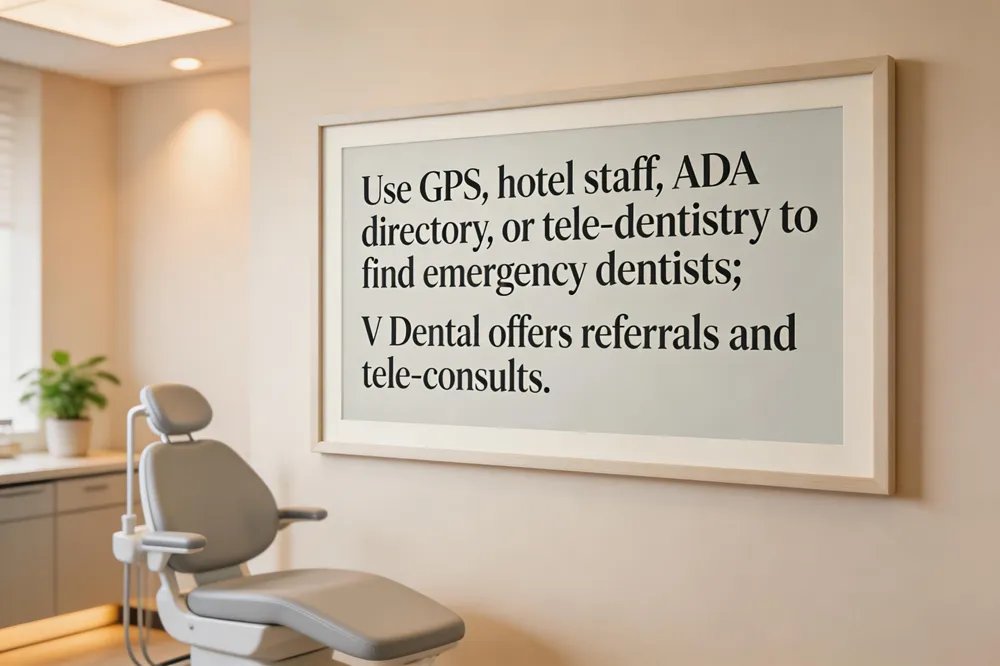 When a dental problem strikes far from home, the first step is to use the tools you already have. A quick GPS search for “emergency dentist near me” will usually pinpoint the closest provider, and hotel staff or a concierge can often recommend a trusted local clinic. Online directories such as the ADA’s Find‑a‑Dentist tool, the International Association of Dental Assistance (IAMAT), or travel‑insurance provider lists are also reliable resources for locating urgent care.
If you can’t reach a dentist in person right away, tele‑dentistry offers a convenient bridge. Many practices can triage your symptoms via video call, prescribe pain medication, and advise on temporary measures while you arrange an in‑person visit. Before you travel, verify that your dental or travel insurance covers out‑of‑area emergencies and that you have the insurer’s emergency‑contact number handy.
V Dental maintains a referral network for patients who need care outside the Live Oak area. If you’re abroad or in another state and require immediate attention, call our office; we can connect you with a qualified emergency dentist, share your recent X‑rays digitally, and ensure continuity of care when you return.
What to do if you get a toothache abroad? Rinse with warm water, gently floss to remove debris, and take an OTC pain reliever. If pain persists after a few hours, locate the nearest emergency clinic using GPS or hotel staff. Upon returning to Live Oak, schedule an appointment with V Dental for assessment and preventive planning.
How much do mobile dentists charge? A basic exam and cleaning typically runs $150‑$350, travel travel fee. More complex work (extractions, dentures, restorations) is billed separately. Some insurance plans cover at‑home care, but coverage varies. V Dental does not provide mobile services; however, we can refer you to reputable mobile dentists in the Live Oak area upon request.
Pre‑Travel Prevention: Reducing the Risk of a Dental Crisis
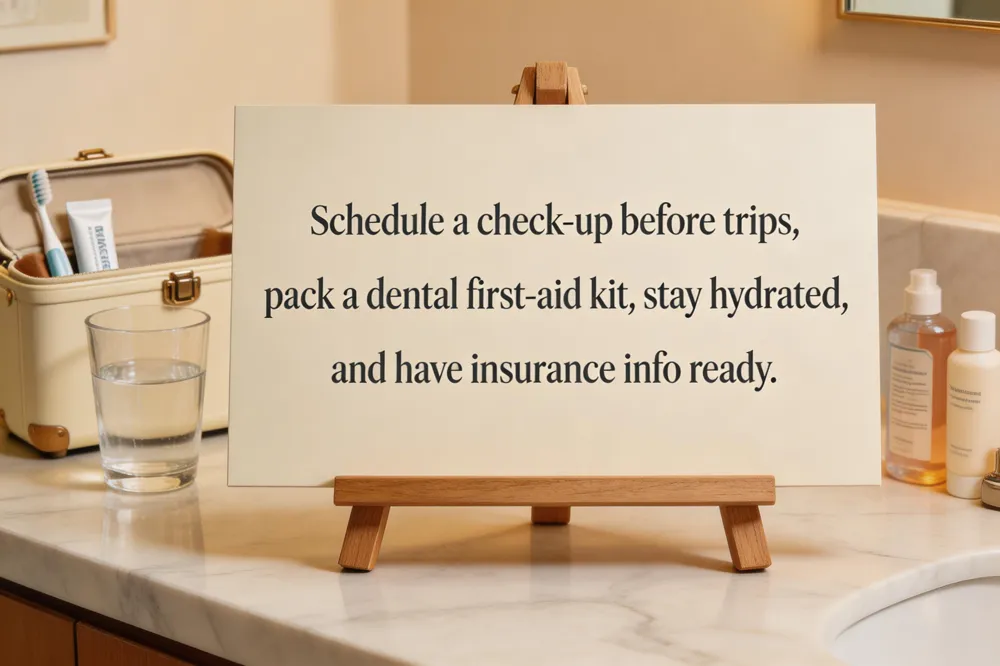 Schedule a comprehensive dental check‑up 2–4 weeks before departure to identify cavities, loose fillings, or gum disease that could become emergencies on the road. Pack a travel‑size dental first‑aid kit containing a soft toothbrush, fluoride toothpaste, floss, gauze, a small container for a lost tooth, over‑the‑counter pain relievers (ibuprofen or acetaminophen), temporary dental cement or sugar‑free gum, a salt packet for warm rinses, and a cold‑compress pack. Verify that your dental insurance (or supplemental travel insurance) covers out‑of‑area or international emergencies, and keep a copy of the policy and emergency contact numbers handy. Stay well‑hydrated to maintain saliva flow, avoid hard or sticky foods, and wear a mouthguard during sports or high‑impact activities.
What to do if you have a dental emergency while traveling? 1️⃣ Rinse with warm water, remove debris. 2️⃣ Apply a cold compress. 3️⃣ Take an OTC pain reliever. 4️⃣ Contact V Dental (or your regular dentist) for urgent guidance or referral. 5️⃣ Seek immediate care at the nearest emergency department for severe bleeding, facial swelling, or a knocked‑out tooth.
How to deal with tooth pain on vacation? Rinse gently, floss to clear food, use a cold compress in 15‑minute intervals, and take ibuprofen or acetaminophen. If a filling or crown is loose, protect it with temporary cement or sugar‑free gum. Call V Dental for a tele‑consultation; we’ll determine whether you need to return to Live Oak or can safely see a local emergency dentist. Keep hydrated, maintain regular brushing, and use your travel kit until professional care is obtained.
Stay Prepared, Stay Confident
First, stay calm and assess the problem. Rinse the mouth with warm water, apply a cold compress, and take an OTC pain reliever such as ibuprofen. If a tooth is knocked out, handle it by the crown only, rinse briefly, and store it in milk, saliva, or a preservation kit; seek dental care within 30‑60 minutes. For a lost filling or crown, clean the area and apply dental cement or sugar‑free gum. Carry a dental kit and your insurance information, and locate the nearest emergency dentist using GPS or a hotel concierge. V Dental in Live Oak, Texas, offers triage and imaging to aid travelers abroad. Schedule a check‑up 2–4 weeks before departure to prevent emergencies and enjoy a vacation.