Why Dental Benefits Matter
Dental benefits matter because they set an annual maximum that, if unused, is lost at year‑end, so patients must plan to use every dollar. Preventive care—cleanings, exams, X‑rays—is usually covered at 100 % and doesn’t count toward the deductible, letting you preserve benefit dollars for later restorative work. By meeting the preventive allowance and addressing small issues early, you avoid costly procedures later and maximize out‑of‑pocket savings. Early scheduling secures convenient slots and prevents missing out on remaining this benefits.
Plan Early, Use Early: The Power of Preventive Care
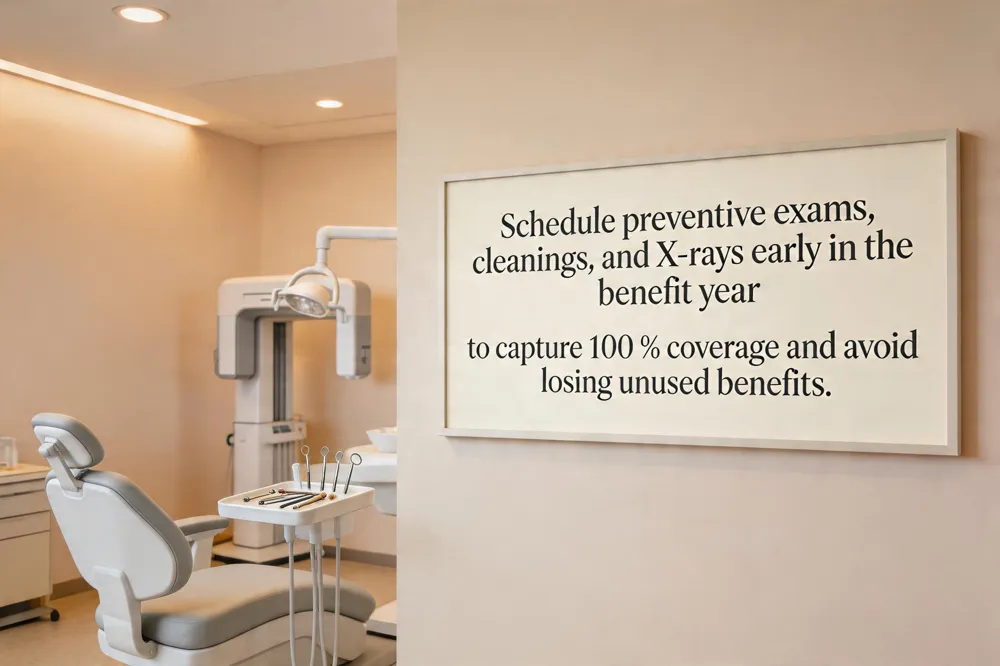 Preventive services—routine exams, cleanings, fluoride treatments, and diagnostic X‑rays—are usually covered at 100 % and do not count toward the annual maximum. Because most dental plans reset on January 1 (or December 31) and any unused portion is forfeited, scheduling these visits early in the benefit year lets you capture the full value of your coverage.
Do dental benefits renew every year? Yes. The annual maximum, deductible, and service limits reset each calendar year. Unused benefits are lost, so taking advantage of fully‑covered preventive care early helps preserve dollars for later restorative work. V Dental can review your remaining balance and map out a treatment plan before the reset.
How can I use dental insurance without the insurance card? Provide V Dental with your name, DOB, member ID (or SSN) and group number when you book an appointment. Most insurers offer digital ID cards via their member portal or mobile app; you can display the information on your phone or print a copy. V Dental will verify eligibility electronically, so a physical card isn’t required.
Track your benefits each month through your insurer’s portal or ask the office for an Explanation of Benefits (EOB). Pair this with Flexible Spending Account (FSA) or Health Savings Account (HSA) funds—also “use‑it‑or‑lose‑it”—to stretch every benefit dollar and avoid a year‑end rush.
Strategic Timing of Major Treatments
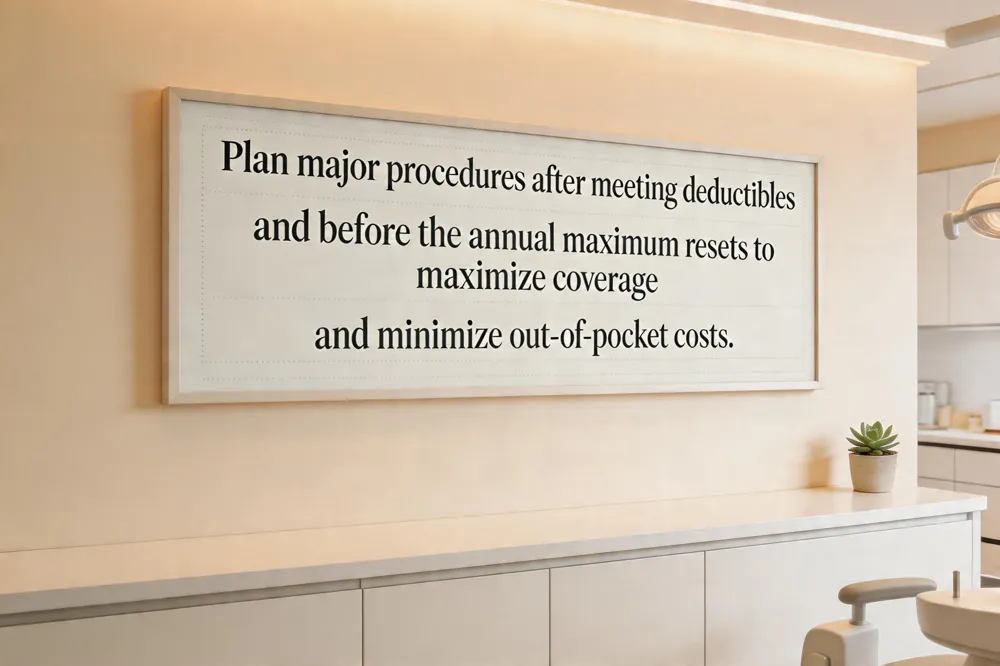 Dental insurance typically covers a range of services, but the depth of coverage varies by category. Preventive care—cleanings, exams, and X‑rays—often 100 % covered with no deductible. Basic restorative work such as fillings and simple extractions is reimbursed at a higher percentage after the deductible is met. Major procedures—including crowns, bridges, dentures, root canals, and many oral surgeries—are covered at a lower coinsurance rate and count toward the annual maximum. Orthodontic treatment, especially for children, may be included, while adult orthodontics often require a rider. Cosmetic services like veneers or whitening are usually excluded.
For wisdom‑tooth removal, most plans pay a portion of the surgical extraction when deemed medically necessary, dramatically reducing out‑of‑pocket costs. V Dental can file claims and provide estimates, and flexible financing is available for uncovered fees.
Some carriers offer “no‑waiting‑period” options at higher premiums.
A deductible is the amount you must pay before the insurer shares costs. For example, with a $50 deductible and a $250 filling, you pay $50 first, then the plan covers 80 % of the remaining $200 ($160), leaving $40 plus the deductible for a $90 total out‑of‑pocket cost. Preventive services are usually exempt from the deductible.
Choosing the Right Plan and Network
 What types of dental insurance plans are available?
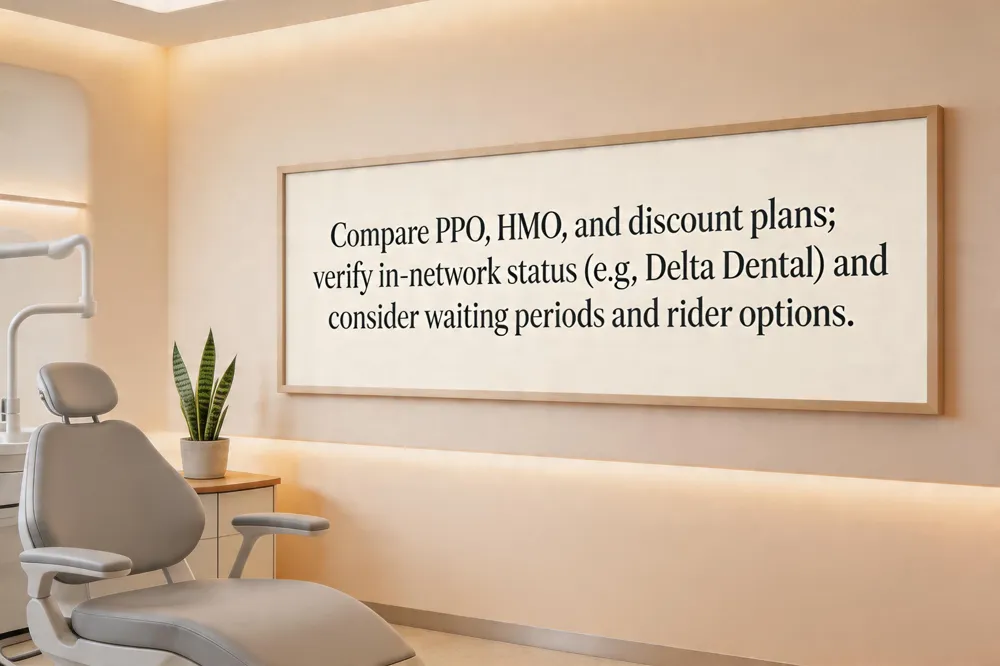
Dental insurance comes in several main formats: Preferred Provider Organization (PPO) plans, which let you see any dentist but give the biggest savings when you use in‑network providers; Health Maintenance Organization (HMO) plans, which require you to choose a primary dentist and stay within a limited network; and discount or membership plans, which are not insurance but offer reduced fees for participating patients. Large carriers such as Delta Dental offer PPO, Premier, and DeltaCare options, with DeltaCare providing a copay‑based, predictable‑cost model. V Dental is in‑network with many PPOs and accepts several discount plans, giving you flexibility to choose the type that best fits your budget and care needs.
Is Delta Dental accepted at V Dental?
Yes. V Dental accepts Delta Dental insurance and is in‑network with a number of Delta Dental PPO plans, allowing members to receive preventive, restorative, and cosmetic services at their negotiated rates. The office can verify eligibility and help submit claims.
Are Marketplace dental plans worth it?
Marketplace dental plans can be a solid choice if you lack employer coverage, especially for families with children where pediatric dental is an essential health benefit. However, stand‑alone adult plans often have waiting periods and limited major‑procedure coverage, so compare premiums, deductibles, and networks carefully. V Dental can help you integrate a Marketplace plan with your care.
Does Medicare cover dental abscess?
Original Medicare (Part A and B) does not cover dental abscess treatment. Medicare Advantage plans sometimes include limited emergency dental benefits, but coverage varies. If you have Original Medicare, you’ll be responsible for the cost unless you have supplemental dental insurance. V Dental can verify any coverage and arrange affordable financing.
Special Populations and Coverage Gaps
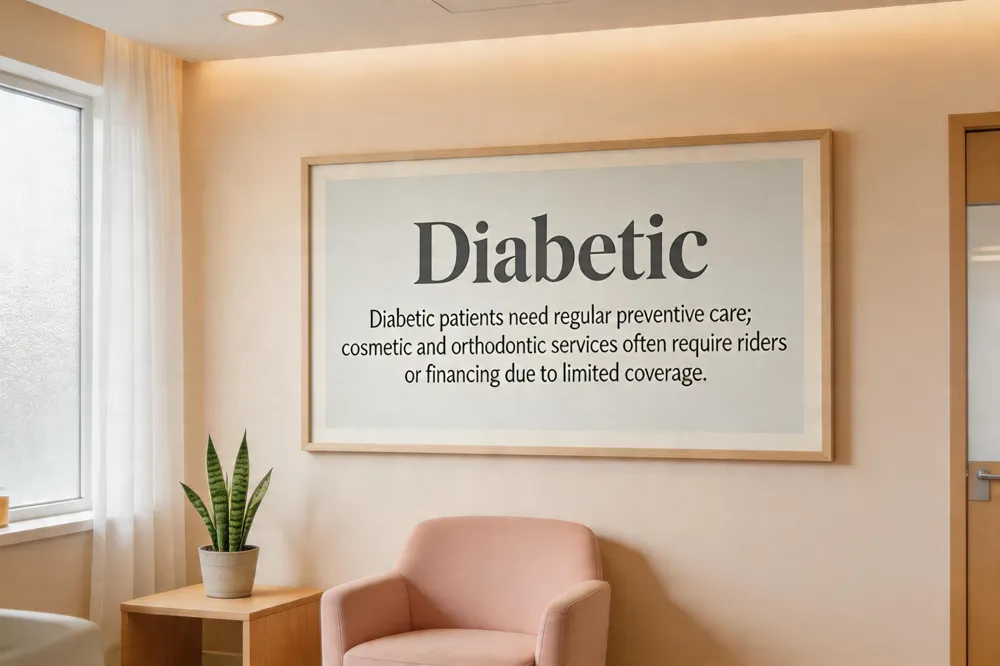 People with diabetes are at heightened risk for gum disease, cavities, and delayed healing, but dental plans do not waive fees for them. Diabetes does not qualify patients for free dental treatment in the United States. V Dental helps diabetic patients by emphasizing regular preventive exams, cleanings, and fluoride treatments—services that are typically covered at 100 % and do not count toward the annual deductible. Early detection and timely care can prevent costly restorative work that would otherwise eat into the annual maximum.
Dental insurance most often excludes purely cosmetic procedures. Teeth whitening, porcelain veneers, and aesthetic bonding are generally not covered unless a specific rider is purchased. Orthodontic care, especially adult braces or clear aligners such as Invisalign, usually requires an orthodontic rider; without it, the insurer will pay little or nothing. Many plans also limit coverage for dental implants, full‑arch prosthetics, and the routine upkeep of removable appliances. V Dental works with most insurers and offers flexible financing to bridge these gaps, ensuring patients can still achieve functional and aesthetic oral health goals.
Financing, FSAs, and Getting the Most Value
 In 2024 most dental plans cap annual benefits at $1,000‑$1,500 for routine and basic services, with many offering up to $2,000‑$2,500 for major work or orthodontics. Preventive care – cleanings, exams and X‑rays – is usually covered at 100 % after a modest $0‑$50 deductible, while fillings and simple extractions receive 70‑80 % reimbursement and crowns, bridges or implants get 50‑70 %. A typical premium range is $240‑$600 per year; $600 annually (≈$50 / month) sits at the high end of that range, providing broader coverage such as Invisalign or implants, but it is still common for comprehensive plans in Texas where the average h around $300. ForPay‑of‑pocket savings, Flex Spending Accounts (FSAs) and Health Savings Accounts (HSAs) let you pay eligible dental expenses with pre‑tax dollars, effectively stretching the annual maximum. Modern technology at V Dental—CBCT 3‑D imaging, digital X‑rays, intra‑oral cameras, and iTero 3‑D scanning—reduces repeat visits and unnecessary procedures, preserving more of your benefit dollars for essential care.
Final Takeaways
Start by reviewing your plan’s benefits early each year, then schedule major work in phases to span two benefit periods. Choose an in‑network dentist to capture negotiated discounts, and take advantage of flexible financing or payment plans to cover any out‑of‑pocket gaps.