Understanding the Invisalign Journey
Invisalign has become a top choice over traditional braces because it’s virtually invisible, removable for easy oral hygiene, and comfortable enough to eat any foods. V Dental leverages cutting‑edge tools such as the iTero 3‑D scanner, CBCT imaging, digital X‑rays and ClinCheck® software to create precise, custom treatment plans. The journey starts with a comprehensive exam and digital scan, followed by a personalized aligner series worn 20‑22 hours daily, routine 6‑8‑week check‑ups, possible refinement trays, and concludes with a custom retainer worn full‑time then nightly for lifelong stability and confidence.
Stage‑by‑Stage Overview of Invisalign Treatment
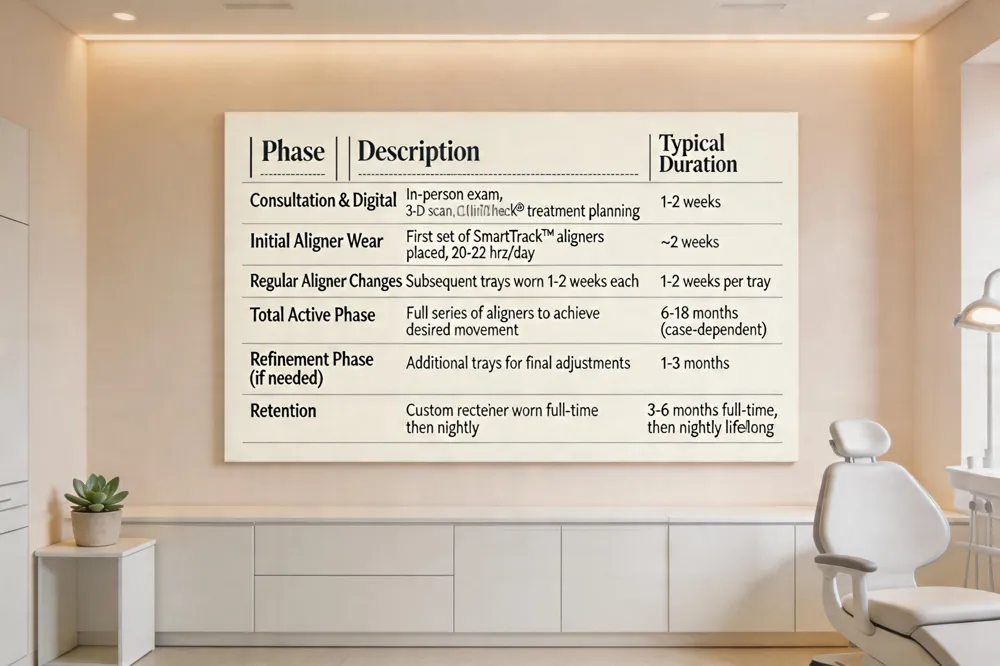
| Phase | Description | Typical Duration |
|---|---|---|
| Consultation & Digital Scanning | In‑person exam, iTero™ 3‑D scan, ClinCheck® treatment planning | 1‑2 weeks |
| Initial Aligner Wear | First set of SmartTrack™ aligners placed, 20‑22 hrs/day | ~2 weeks |
| Regular Aligner Changes | Subsequent trays worn 1‑2 weeks each | 1‑2 weeks per tray |
| Total Active Phase | Full series of aligners to achieve desired movement | 6‑18 months (case‑dependent) |
| Refinement Phase (if needed) | Additional trays for final adjustments | 1‑3 months |
| Retention | Custom retainer worn full‑time then nightly | 3‑6 months full‑time, then nightly lifelong |
 Invisalign begins with an initial consultation and digital scanning. At V Dental in Live Oak, Texas, Dr. Brandon Villarreal uses an iTero™ scanner to capture a precise 3‑D model of your teeth, eliminating traditional impressions. The data is uploaded to ClinCheck® software for custom treatment planning, where the projected tooth movements and final smile are visualized and approved by you.
Next comes the series of clear aligners and change schedule. Each aligner, made from SmartTrack™ material, is worn 20‑22 hours per day and replaced every 1‑2 weeks. Most patients advance through 6‑18 months of aligner sets, depending on case complexity (mild, moderate, or severe).
If the teeth haven’t reached the planned positions, a refinement phase adds extra trays for 1‑3 months at no additional charge.
Finally, the retention after active treatment involves a custom retainer worn full‑time for the first 3‑6 months, then nightly, to preserve your new alignment for life.
What are the phases of an Invisalign treatment? The journey starts with consultation and digital planning, followed by the active aligner phase (changing trays every 1‑2 weeks), an optional refinement stage, and concludes with a lifelong retention protocol.
Timing Each Phase – How Long Does It Take?
| Stage | Expected Timeframe |
|---|---|
| Consultation & Digital Planning | 1‑2 weeks |
| Initial Aligner Wear | ≈2 weeks |
| Regular Aligner Changes | 1‑2 weeks per tray |
| Total Active Phase | 6‑18 months (most adults 12‑18 months; mild 6‑12 months; severe up to 24 months) |
| Refinement Period (if required) | 1‑3 months |
| Retention Phase | Full‑time 3‑6 months, then nightly for life |
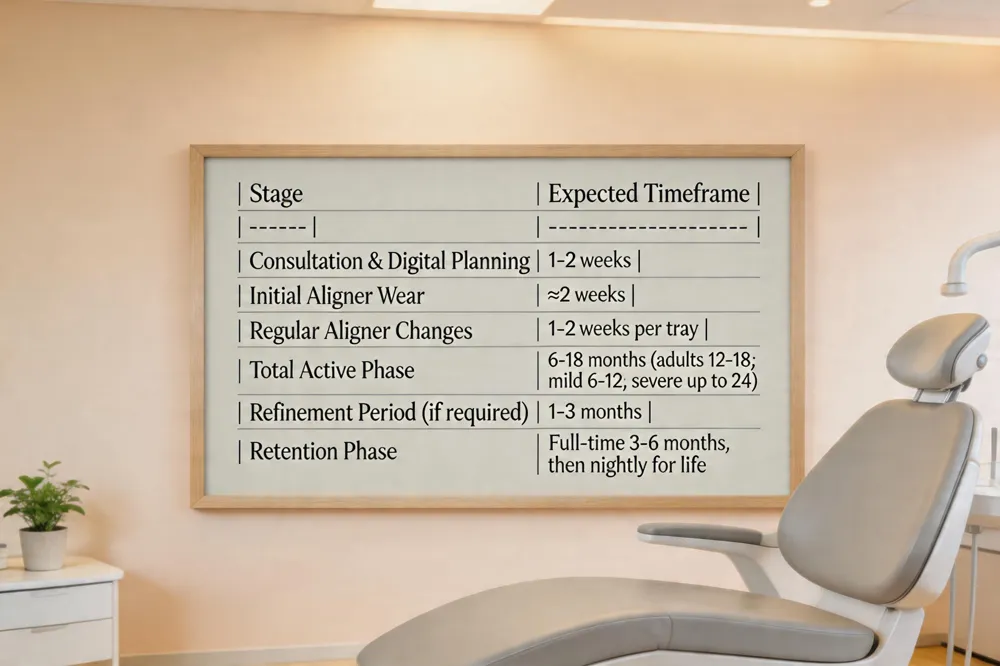 Invisalign treatment is broken into clearly defined stages, each with an expected duration.
Consultation & Digital Planning (1‑2 weeks) – Your dentist evaluates your oral health, takes a 3‑D iTero scan and uses ClinCheck® software to map out tooth movements. This planning phase usually takes one to two weeks before the first aligner is fabricated.
Initial Aligner Wear (≈2 weeks) – You begin the active phase by wearing the first set of SmartTrack™ aligners for about 20‑22 hours each day. The first trays feel tight and may cause mild soreness, which typically eases after a few days.
Regular Aligner Changes (1‑2 weeks per tray) – After the initial two weeks, each subsequent aligner is worn for one to two weeks before moving to the next set. This cadence continues throughout the treatment.
Total Active Phase (6‑18 months) – Most adult cases finish within 12‑18 months; milder cases can complete in 6‑12 months, while severe malocclusions may extend to 24 months.
Refinement Period (1‑3 months if required) – If final adjustments are needed, a short refinement series of aligners is added, typically lasting one to three months.
Retention Phase (full‑time 3‑6 months, then nightly) – After the active phase, a custom retainer is worn full‑time for the first three to six months, then reduced to nightly wear for lifelong stability.
Answer to the question: Each Invisalign stage follows the timeline above, ensuring predictable progress from consultation through retention.
Aligner Count, Cost, and Financial Planning
| Case Severity | Approx. Tray Count | Cost Range (USD) | Financing Options |
|---|---|---|---|
| Mild | 20‑30 trays | $4,500‑$5,500 | CareCredit, LendingPoint, Sunbit, $77/mo plans |
| Moderate | 30‑40 trays | $5,500‑$6,500 | Same as above |
| Severe / Refinement | 40‑50 trays | $6,500‑$7,500 | Same as above |
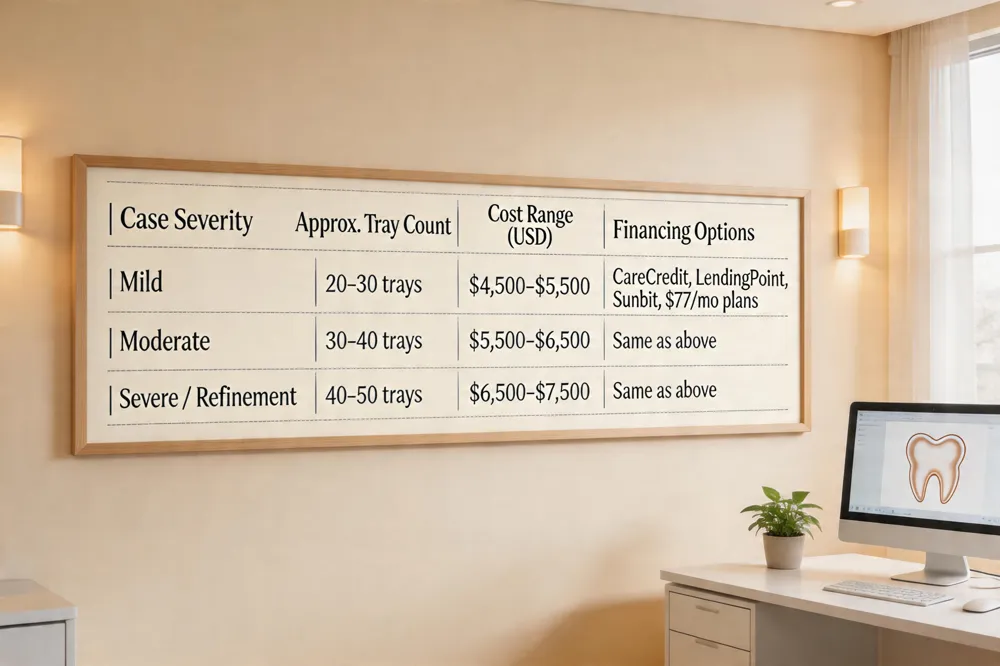 A typical 12‑month Invisalign case uses about 20‑30 clear aligner trays, while a full‑year (12‑month) treatment usually requires 30‑40 trays. When a case extends to two years, it signals greater complexity or the need for refinements, bringing the total tray count to roughly 40‑50 trays, including any final refinement sets. V Dental in Live Oak, TX, quotes Invisalign between $4,500 and $6,500, reflecting case severity, tray number, and any ancillary procedures such as attachments or minor extractions. The practice offers flexible financing—CareCredit, LendingPoint, Sunbit, and custom monthly payment plans—so patients can spread the cost, often starting around $77 per month. A $6,000 price point is squarely within the national average for comprehensive Invisalign treatment, which typically ranges from $5,000 to $7,000 depending on geography and case complexity. V Dental provides a free initial consultation to deliver a precise quote and discuss financing options, ensuring transparency and affordability for patients throughout Live Oak and surrounding communities.
Digital Precision – Technology Behind V Dental’s Invisalign
| Technology | Role in Treatment |
|---|---|
| iTero™ Scanner | Captures precise 3‑D intra‑oral scan (no traditional impressions) |
| CBCT Imaging (optional) | Provides 3‑D bone and root anatomy for complex cases |
| ClinCheck® Software | Simulates entire treatment, plans each tooth movement, generates tray specifications |
| SmartTrack™ Material | Aligners material that delivers consistent force and comfort |
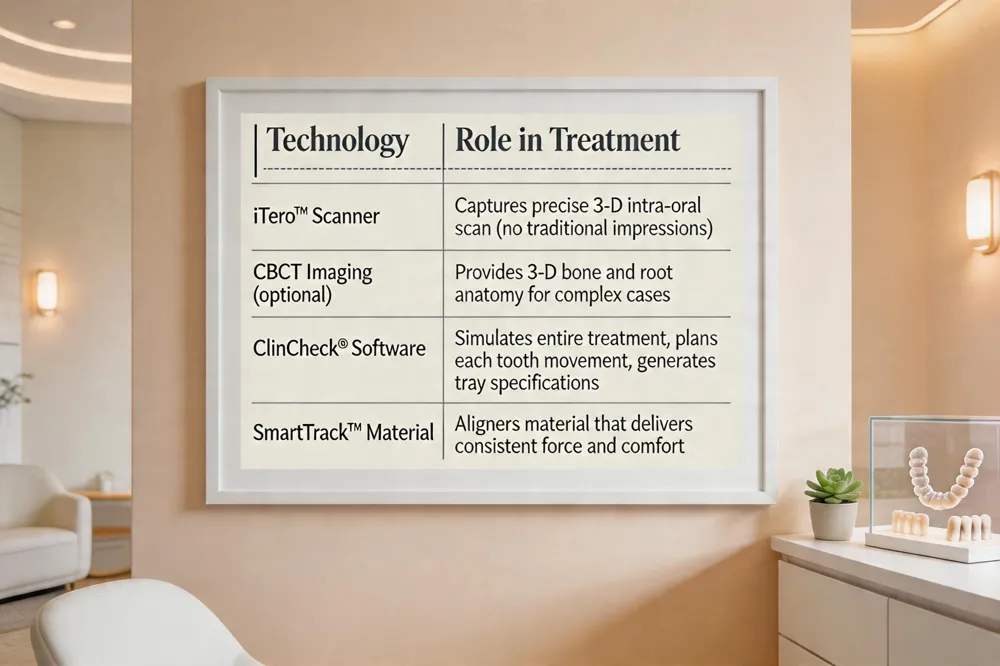 Once the imaging is complete, the information feeds into Invisalign’s ClinCheck® software. ClinCheck® creates a 3‑D simulation of the entire treatment, allowing the dentist to visualize each tooth’s movement, adjust the plan in real time, and predict the final smile outcome. The software also generates exact specifications for every aligner tray, ensuring that each piece fits perfectly and applies the intended force.
This integrated digital workflow—from iTero scan and CBCT imaging to ClinCheck® planning—provides V Dental patients with personalized, accurate, and efficient Invisalign treatment, reducing appointments and optimizing results.
Patient FAQs – Comfort, Lifestyle, and Appointments
| FAQ | Answer |
|---|---|
| Is Invisalign a retainer? | No. Aligners move teeth; a separate retainer maintains the result. |
| Can I kiss while wearing aligners? | Yes—aligners are smooth and discreet; you may briefly remove them if desired. |
| What is the hardest week of Invisalign? | The first week, when the mouth adjusts to the new trays. |
| What to expect at the second appointment? | New digital scan or photos, fitting of first aligners, attachment placement if needed, and wear‑and‑care instructions. |
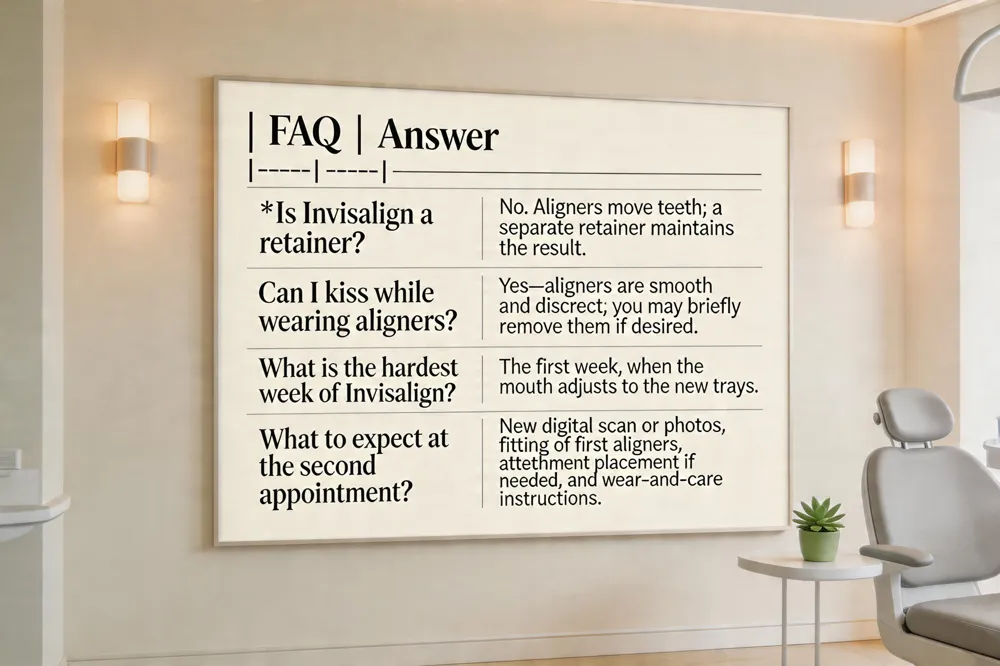 Difference between Invisalign aligners and retainers – Aligners are a series of custom‑made, clear trays that apply gentle pressure to move teeth toward their final positions. Once the active phase ends, a separate retainer (often a thin Vivera® tray) is prescribed to hold the teeth steady and prevent relapse. While both are removable and look similar, their purposes differ: aligners move teeth; retainers maintain the result.
Intimacy while wearing aligners – You can kiss comfortably with Invisalign in place. The smooth, low‑profile plastic fits snugly against the teeth and does not irritate lips or gums. If you prefer, you may briefly remove the trays for an intimate moment, but be sure to wear them the recommended 20‑22 hours daily to stay on schedule.
Typical discomfort during the first week – The first week is usually the hardest. Expect mild pressure, a tight feeling, and possibly a temporary lisp. This soreness usually eases after a few days as the mouth adapts.
What to expect at the second appointment – Your second visit includes a fresh digital scan or intra‑oral photos to verify tooth movement, fitting of the first custom aligner set, placement of any necessary attachments, and detailed wear‑and‑care instructions. The dentist will answer any comfort questions and provide the next batch of aligners.
FAQ Answers
- Is Invisalign a retainer? No. Invisalign moves teeth; a separate retainer maintains the result.
- Can I kiss my boyfriend while wearing Invisalign? Yes—aligners are smooth and discreet; you may briefly remove them if desired.
- What is the hardest week of Invisalign? The first week, when the mouth adjusts to the new trays.
- What should I expect at my second Invisalign appointment? A new scan, fitting of the first aligners, attachment placement if needed, and clear instructions for wear and care.
Retention – Keeping Your New Smile Stable
| Retention Period | Wear Schedule | Care Instructions |
|---|---|---|
| Immediate (first 3‑6 months) | Full‑time 20‑22 hrs/day (remove only for eating/hygiene) | Rinse after use, brush gently with soft brush, avoid hot water; store in case |
| Long‑term (after 3‑6 months) | Nightly only (indefinitely) | Same cleaning routine; regular check‑ups at 3, 6, 12 months then annually |
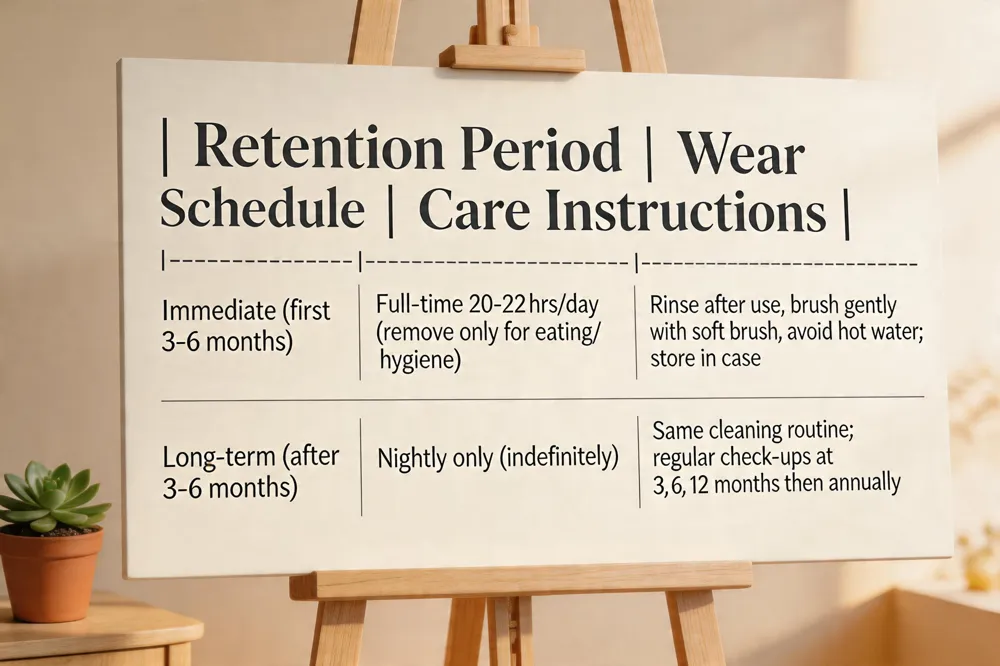 After the last aligner is removed, the retention phase begins to lock the new tooth positions in place. For the first 3‑6 months patients should wear their custom retainer full‑time—about 20‑22 hours daily—removing it only for eating and oral‑hygiene. Once this initial period is complete, the schedule shifts to nighttime wear only, which is typically continued indefinitely to prevent relapse. Proper retainer care is essential: rinse the tray with lukewarm water after each use, brush it gently with a soft toothbrush and a mild antibacterial soap, and avoid hot water or toothpaste that can warp or scratch the plastic. Store the retainer in its protective case when not in use. Long‑term follow‑up appointments help ensure stability; most dentists recommend check‑ups at 3, 6, and 12 months post‑treatment, then annually as needed. Consistent wear, diligent cleaning, and regular professional reviews together safeguard the lasting results of your Invisalign journey.
Final Thoughts on Your Invisalign Timeline
Success with Invisalign depends on two simple habits: wearing your aligners 20‑22 hours each day and keeping every scheduled check‑up every 6‑8 weeks. Modern 3‑D scanning, iTero imaging and ClinCheck software let V Dental visualize the entire smile journey before the first tray is made, ensuring precise movements and fewer surprises. From the initial digital scan through custom SmartTrack aligners, refinement trays if needed, and lifelong Vivera retainers, V Dental’s team guides you at every step, providing flexible financing, clear instructions, and ongoing support for a lasting, confident smile today.