Introducing Laser Dentistry at V Dental
Laser dentistry uses focused light energy—rather than traditional drills or scalpels—to cut, reshape, or disinfect soft and hard oral tissues. By selecting specific wavelengths and power settings, lasers target only diseased tissue while preserving healthy structure. This matters to patients because the technology dramatically reduces noise, vibration, and pressure, often eliminating the need for local anesthesia and resulting in far less pain, swelling, and recovery time. For dentists, lasers provide pinpoint precision, built‑in sterilization, and hemostasis, which shortens appointment times, lowers infection risk, and improves treatment outcomes. Key advantages include minimally invasive procedures, reduced bleeding and postoperative discomfort, faster healing, enhanced patient comfort—especially for those with dental anxiety—and the ability to integrate seamlessly with V Dental’s digital tools such as CBCT 3‑D imaging, intra‑oral cameras, and iTero scanning for personalized, efficient care.
Balancing Benefits and Limitations of Laser Dentistry
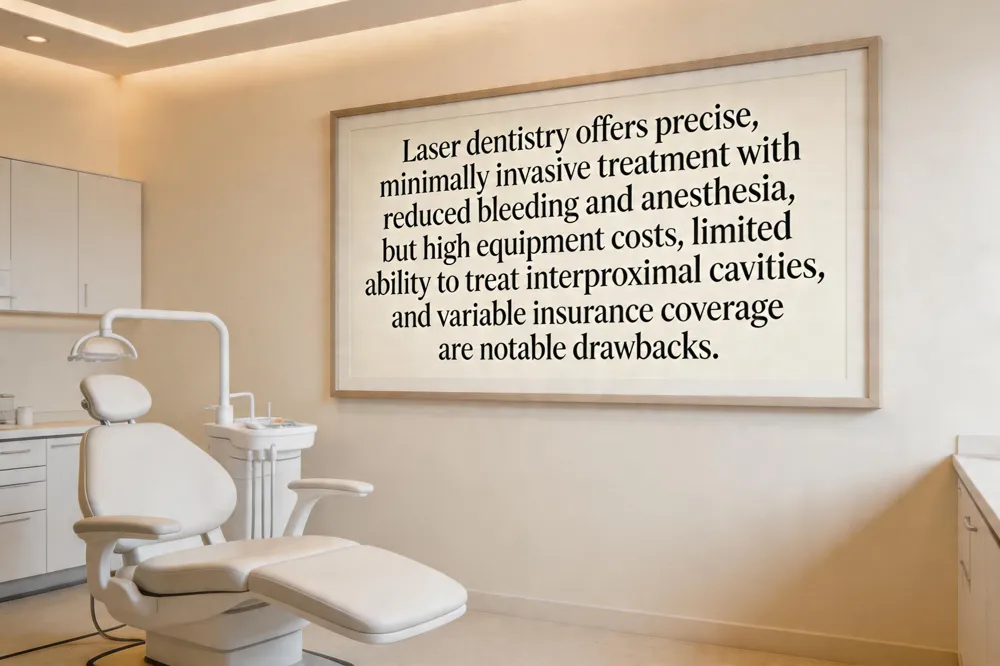 Laser dentistry delivers high‑precision, minimally invasive treatment. By focusing light energy on the exact area of decay or diseased tissue, the laser removes only the targeted material, preserving healthy tooth structure and reducing intra‑operative bleeding. The same precision enables soft‑tissue work such as gum reshaping, frenectomy, and lesion removal with near‑instant cauterization, which translates into faster healing and less postoperative swelling. Because the laser seals blood vessels and nerve endings, many procedures require little or no local anesthesia, a major comfort advantage for anxious patients.
Pros and cons of laser dentistry – The technology’s sterilizing effect lowers infection risk, and its quiet, vibration‑free operation eases dental anxiety. However, the upfront cost of laser units is high, and insurance coverage can be variable, often making the patient price comparable to or higher than conventional care. Limitations include the inability to treat interproximal cavities, extensive decay beneath existing restorations, or to remove crowns and bridges; such cases still need traditional drills or surgical tools.
Two drawbacks of laser therapy – First, some treatments may require multiple sessions to achieve the desired outcome, extending overall treatment time and cost. Second, results can vary between patients, with occasional transient side effects such as mild redness, swelling, or a brief burning sensation after the procedure.
Disadvantages of laser dentistry – It is best suited for small‑to‑medium lesions and cannot reliably address large or interproximal caries, nor can it prepare teeth for removal of crowns, bridges, or existing fillings. Misuse can damage healthy pulp or soft tissue, and despite reduced anesthesia needs, deeper procedures may still require it. The higher equipment and procedural expenses may increase overall patient costs.
Laser Dentistry in Live Oak: Technology and Tools
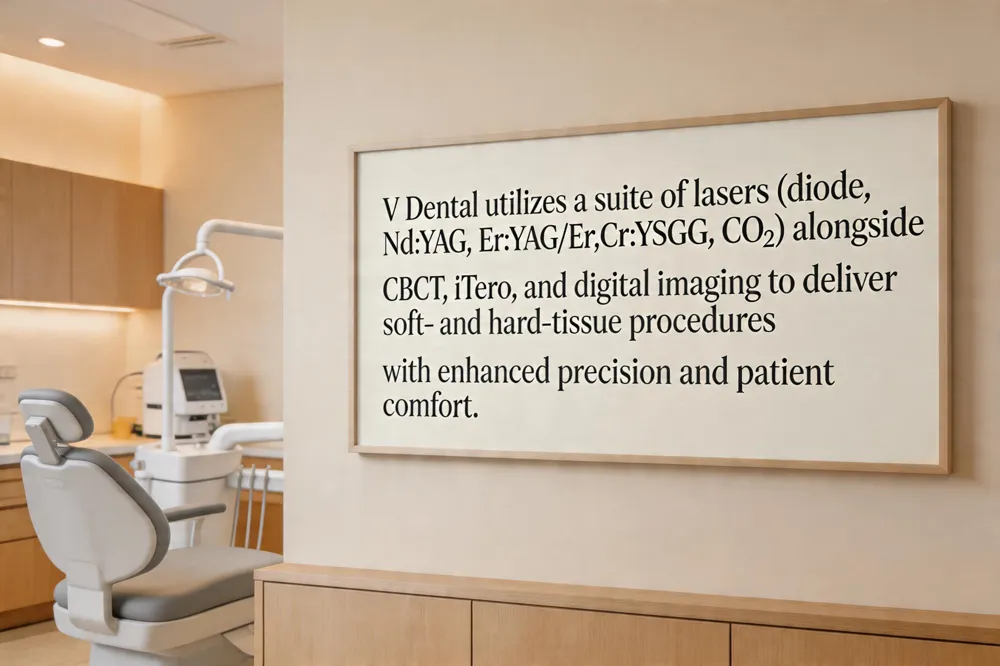 V Dental in Live Oak, Texas brings state‑of‑the‑art laser dentistry to the community, offering both soft‑tissue and hard‑tissue procedures that are minimally invasive and often anesthesia‑free. By integrating CBCT 3D imaging, digital X‑rays, intraoral cameras, and the iTero 3D scanner, the practice can pinpoint cavities, gum disease, and tissue corrections, delivering faster healing, reduced bleeding, and a lower risk of infection. One of the newest tools in the office is the Solea laser system, a quiet, high‑speed device that removes decay, reshapes enamel, and performs soft‑tissue work with virtually no pain. Solea’s “Protect” protocol gently heats the tooth surface to strengthen enamel and minimize mineral loss, allowing most treatments to be completed in a single, minutes‑long visit. The practice utilizes a range of laser types: diode lasers (800‑980 nm) for gum contouring, periodontal pocket therapy, and bacterial reduction; Nd:YAG lasers (1064 nm) for deeper soft‑tissue surgery and adjunctive whitening; erbium lasers (Er:YAG or Er,Cr:YSGG at around 2940 nm) for precise hard‑ and soft‑tissue cutting, cavity prep, sensitivity treatment, and bone work; and CO₂ lasers (10,600 nm) for superior hemostasis during gingivectomy, frenectomy, and crown‑lengthening procedures. These technologies together provide Live Oak families with comfortable, efficient, and aesthetically pleasing dental care.
Clinical Applications: Gum Health, Cleaning, and Cosmetic Care
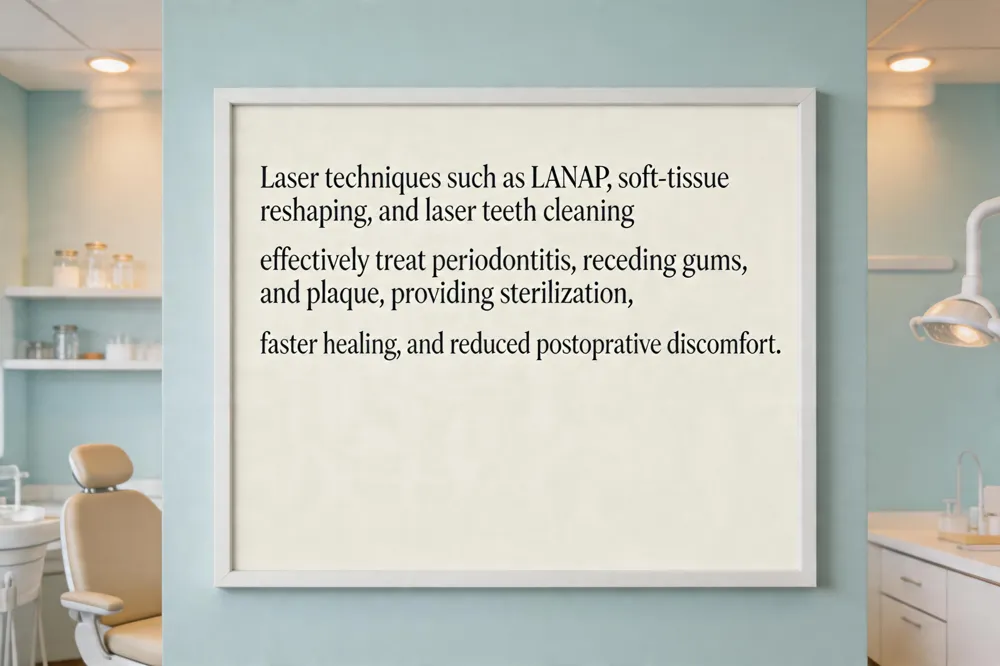 Laser dentistry offers a precise, minimally invasive way to treat gum disease and periodontal infection. Using wavelengths such as Nd:YAG or Er:YAG, lasers can remove diseased soft tissue, eradicate bacterial biofilm, and gently decontaminate root surfaces while sealing blood vessels, which results in minimal bleeding, reduced postoperative discomfort, and faster healing. The Laser‑Assisted New Attachment Procedure (LANAP) demonstrates up to a 99.9 % bacterial kill rate and promotes re‑attachment of gum tissue, making it an effective alternative to traditional flap surgery for moderate to severe periodontitis.
For receding gums, laser therapy can improve attachment and stimulate tissue regeneration, especially when the underlying infection is controlled. While mild recession may benefit from laser alone, severe recession often requires grafting procedures to fully restore lost tissue.
Laser teeth cleaning is generally safe; patients may experience mild gum irritation, temporary tooth sensitivity, or brief swelling, all of which resolve quickly with minimal over‑the‑counter relief.
Is it worth it? For patients with gum disease, persistent plaque, or dental anxiety, laser cleaning provides superior precision, sterilization, and comfort compared with conventional scaling. Integrated with V Dental's digital imaging (CBCT, iTero), laser treatment can be personalized to each Live Oak patient, delivering faster recovery and potentially lower long‑term costs despite a modest price premium.
Cost Considerations and Patient Access
 Laser Treatment Pricing
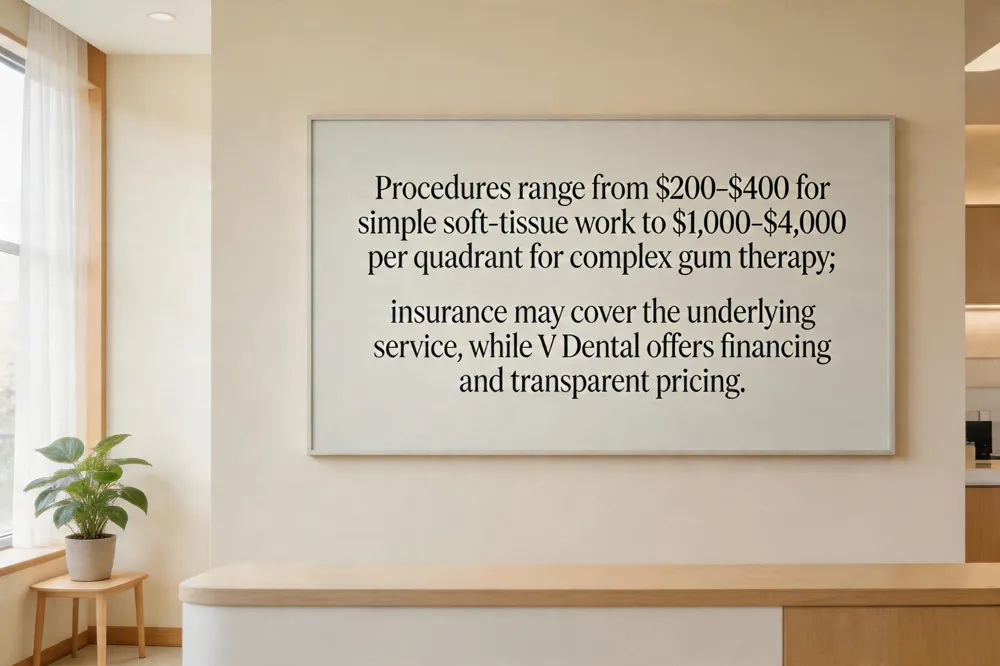
Dental laser treatments typically range from $200 to $400 for basic soft‑tissue procedures, such as a laser frenectomy or cold‑sore therapy. More complex work—like laser gum‑disease therapy , crown‑lengthening, or periodontal pocket decontamination—can cost $1,000 to $4,000 per quadrant, depending on severity. In high‑cost areas or for extensive multi‑quadrant work, out‑of‑pocket expenses may climb to $500–$1,200 or more per visit.
Laser Treatment Pricing
Dental laser treatments typically range from $200 to $400 for basic soft‑tissue procedures, such as a laser frenectomy or cold‑sore therapy. More complex work—like laser gum‑disease therapy , crown‑lengthening, or periodontal pocket decontamination—can cost $1,000 to $4,000 per quadrant, depending on severity. In high‑cost areas or for extensive multi‑quadrant work, out‑of‑pocket expenses may climb to $500–$1,200 or more per visit.
Insurance Coverage and Financing Options Most dental insurance plans cover the underlying procedure (e.g., cavity removal or periodontal therapy) irrespective of whether a laser or traditional tool is used, so only the laser‑specific fee may be billed to the patient. V Dental works with a variety of insurers and offers transparent pricing tables so patients can see exactly what is covered. For families in Live Oak and surrounding communities, V Dental provides flexible financing plans—including interest‑free monthly installments and Care‑based options—to make advanced laser care affordable. The office encourages patients to request a personalized estimate before treatment and to discuss any payment‑plan questions with the staff.
Safety Protocols and Patient Protection Both the patient and the dental team wear wavelength‑specific protective eyewear during every laser procedure to shield eyes from the intense light beam. The practice follows the ANSI Z136.3‑2018 standard for Class 3B/4 lasers, ensuring proper device calibration, appropriate power settings, and thorough staff training. Laser’s inherent sterilizing effect reduces bacterial load, lowering infection risk. Because the laser cauterizes blood vessels as it cuts, bleeding, swelling, and postoperative discomfort are minimized, further protecting patient health and accelerating recovery.
Dental laser treatment cost Dental laser treatments typically range from $200 to $400 for basic soft‑tissue procedures, while more complex work such as laser gum‑disease therapy can cost $1,000 to $4,000 per quadrant depending on severity. In high‑cost areas or for extensive procedures, out‑of‑pocket expenses may climb to $500–$1,200 or more. Most dental insurance plans cover the underlying procedure (e.g., cavity removal) regardless of technique, so only the laser‑specific fee may be billed to the patient. V Dental offers flexible financing options and transparent pricing to help make laser care affordable for families in Live Oak and surrounding communities. Contact the office for a personalized estimate and to explore payment plans tailored to your needs.
Future Outlook: Training, Certification, and Practice Efficiency
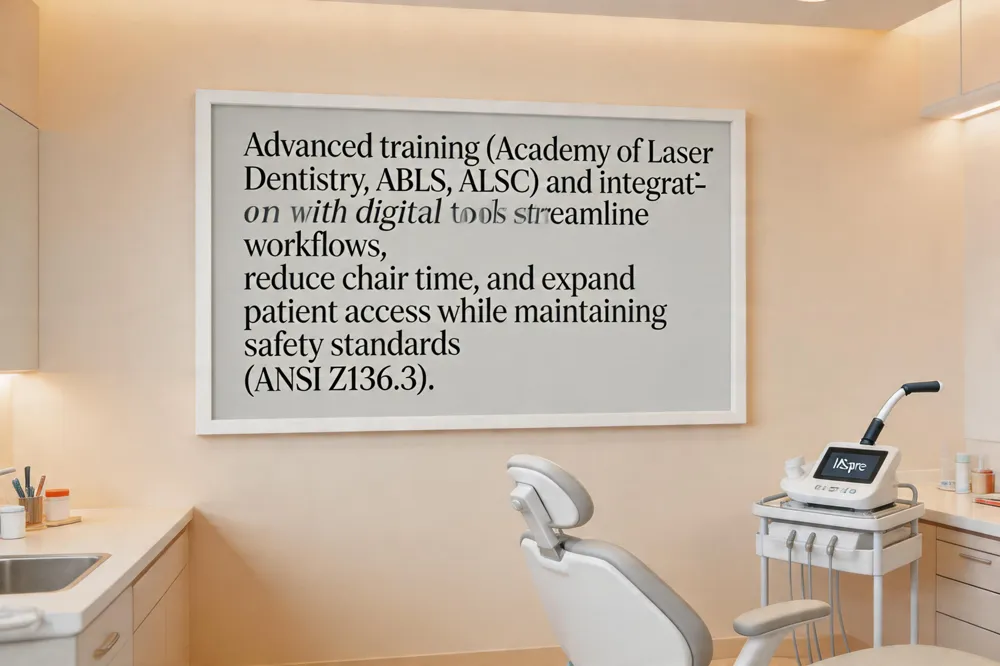 As laser dentistry becomes a cornerstone of modern practices like V Dental, the emphasis on dentist training and certification is growing. Programs such as the Academy of Laser Dentistry’s Laser Certification, the ABLS Full Diplomate curriculum, and hands‑on courses from the American Laser Study Club provide the required safety, physics, and clinical‑procedure education, ensuring clinicians meet ANSI Z136.3‑2018 standards and FDA expectations. Integrating laser units with V Dental’s digital toolkit—CBCT 3‑D imaging, intra‑oral cameras, iTero scanning—allows real‑time treatment planning and precise targeting, reducing chair‑time and instrument turnover. This seamless workflow translates into shorter appointments, fewer follow‑ups, and less postoperative discomfort, which directly boosts patient satisfaction and loyalty. Moreover, the reduced need for anesthesia, sutures, and extensive drilling not only improves comfort for anxious or pediatric patients but also enhances practice efficiency, allowing practices to treat more patients while maintaining high‑quality, minimally invasive care.
Conclusion: Embracing a Comfort‑Focused Future
Laser dentistry brings together precision, comfort, and speed, delivering a modern alternative to traditional drills and scalpels. By targeting only diseased tissue, lasers preserve more healthy tooth and gum structure, reduce bleeding and swelling, and often eliminate the need for local anesthesia. The built‑in sterilizing effect lowers infection risk, while photobiomodulation accelerates healing, allowing patients to resume normal activities almost immediately. Because the procedure is quieter, vibration‑free, and usually painless, it eases dental anxiety for both adults and children. At V Dental, we integrate laser technology with our digital imaging suite—CBCT 3‑D scans, intra‑oral cameras, and iTero scanning—to design truly personalized, minimally invasive treatment plans. We invite patients to explore laser options during their next visit, confident that this cutting‑edge approach aligns with our commitment to comfort, safety, and individualized care. Experience the difference and let us guide you toward a healthier, brighter smile.