Why Home Care Matters
Most toothaches stem from decay, gum infection, cracked teeth, faulty fillings or habit‑related trauma. These problems trigger inflammation of the pulp or surrounding tissues, producing sharp, throbbing, or constant pain. While the underlying issue needs a dentist’s diagnosis, early home care can prevent the pain from escalating. Apply a cold compress to the cheek for 15‑20 minutes each hour to shrink swollen vessels and numb the area, and rinse with a warm salt‑water solution (½ tsp salt in 8 oz warm water) to cleanse debris and reduce inflammation. Over‑the‑counter ibuprofen or acetaminophen further eases discomfort. If pain persists beyond one to two days, is severe, or is accompanied by fever, facial swelling, pus, or difficulty swallowing, seek professional care promptly—these signs often indicate an abscess or infection. Temporary measures buy you precious time to schedule a dental visit while minimizing tissue damage and the risk of spreading infection.
Immediate Relief Techniques
 Extreme tooth pain can't sleep
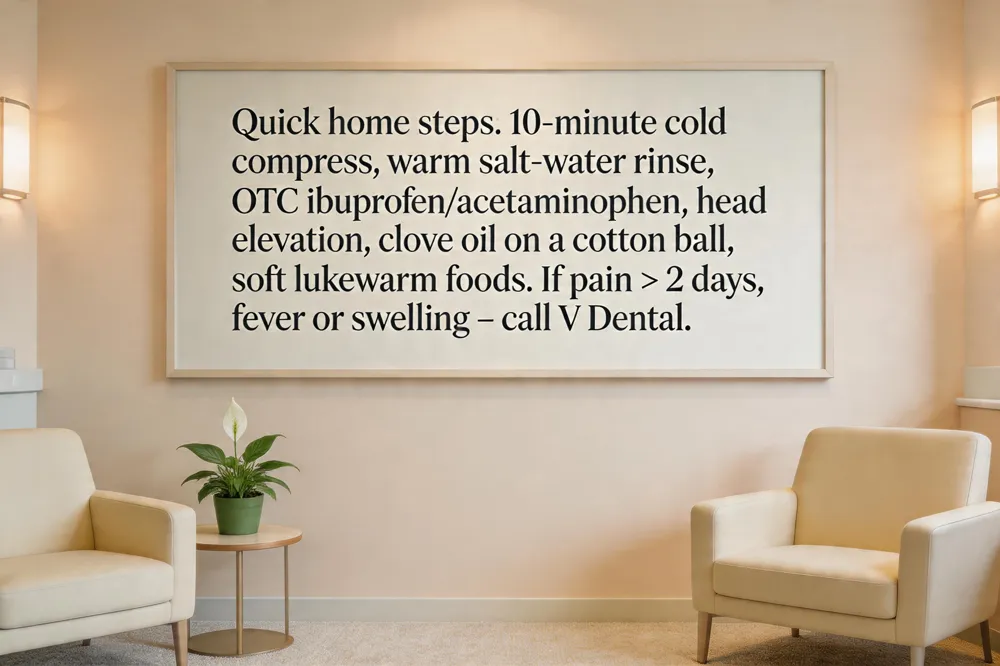
Take ibuprofen or acetaminophen as directed, apply a 10‑minute cold compress to the cheek, and rinse with a warm salt water solution (½ tsp salt in a cup of warm water). Elevate your head with an extra pillow and avoid hot, cold, or sugary foods. If pain persists >2 days, with fever or swelling, call V Dental for emergency care.
Extreme tooth pain can't sleep
Take ibuprofen or acetaminophen as directed, apply a 10‑minute cold compress to the cheek, and rinse with a warm salt water solution (½ tsp salt in a cup of warm water). Elevate your head with an extra pillow and avoid hot, cold, or sugary foods. If pain persists >2 days, with fever or swelling, call V Dental for emergency care.
How to stop tooth pain fast at home at night Rinse with warm salt water for 30 seconds, then place a towel‑wrapped ice pack on the cheek for 15‑20 minutes. Take an over‑the‑counter pain reliever, keep your head elevated, and dab a cotton ball with diluted clove oil (eugenol) on the sore spot. Stick to soft, lukewarm foods.
Unbearable tooth pain what to do at home Apply a cold compress for 10‑15 minutes, rinse repeatedly with warm salt water, and use clove oil for numbing. Take ibuprofen or acetaminophen, and eat soft foods while avoiding extremes of temperature and sugar. Schedule a dental appointment promptly.
How to stop tooth pain fast Use a cold compress hourly for 10 minutes, take an over‑the‑counter pain reliever, and rinse with warm salt water several times daily. Apply clove oil on a cotton swab for temporary relief. Persistent pain warrants immediate V Dental evaluation.
Tooth pain relief medicine NSAIDs like ibuprofen reduce pain and inflammation; acetaminophen soothes ache without swelling control. Benzocaine provides short‑term numbness. Combine with salt‑water rinses and cold compresses. See V Dental if pain exceeds two days or is severe.
Natural Antimicrobial Remedies
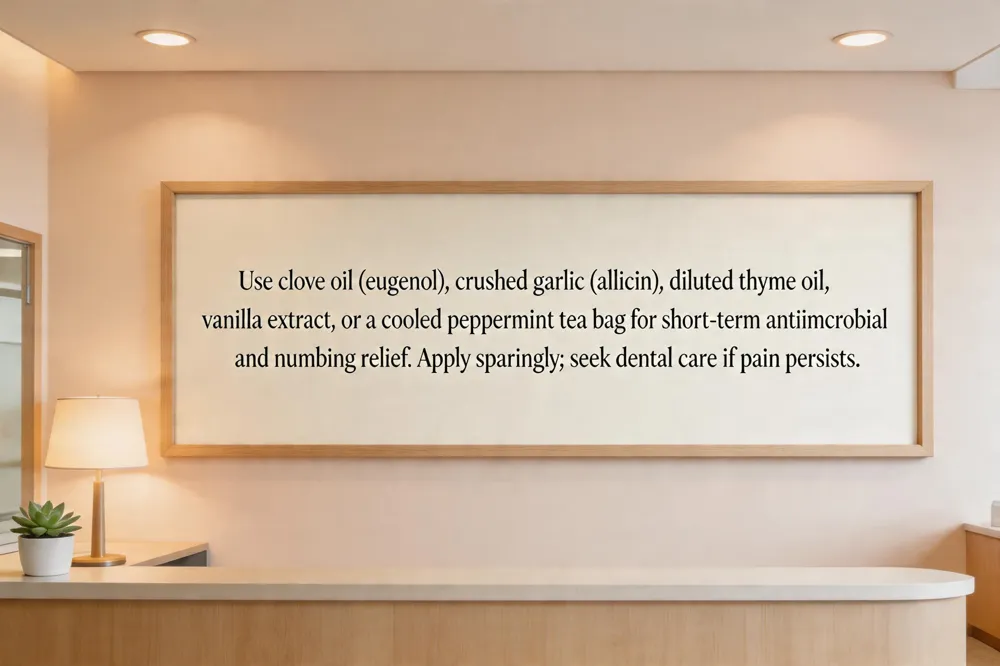 Clove oil’s eugenol, garlic’s allicin, thyme essential oil, vanilla extract, and peppermint tea bags each offer antimicrobial and numbing actions that can soothe a toothache temporarily. Apply a drop of clove oil (diluted with a carrier oil) to a cotton ball and dab it on the sore spot; the eugenol anesthetizes the pulp and fights bacteria. Crush a raw garlic clove into a paste and press it against the tooth—its allicin reduces infection and inflammation, though the odor can be strong. Dilute thyme oil (a few drops in water) and swish or apply locally for its thymol‑based antiseptic effect. Dab a tiny amount of vanilla extract, which also contains eugenol, onto the affected area for brief numbness. Finally, a cooled peppermint tea bag provides menthol’s mild anesthetic and tannins that act as a gentle antiseptic. These home measures are short‑term fixes; if pain persists, spreads, or is accompanied by fever, swelling, or nerve‑related throbbing, see a dentist promptly for proper diagnosis and treatment.
Specific Tooth Conditions and Targeted Relief
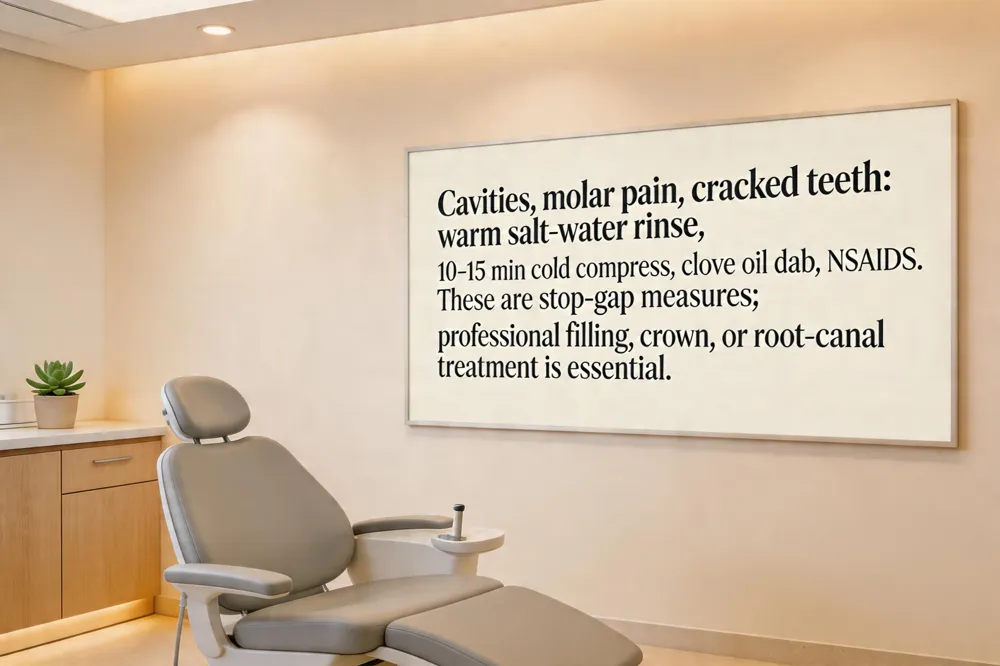 A hole in a tooth (cavity) often causes sharp, throbbing pain. Rinse with a warmwarm salt‑‑water](https://½.colgate.com/en-us/oral-health/cavities/four-homemade-toothache-remedies) (½ tsp salt in warm water), apply a cold compress to the cheek for 10‑minute intervals, and dab a cotton swab with a few drops of clove oil for temporary numbness. Over‑the‑counter ibuprofen can further reduce inflammation, but schedule a dental visit promptly for a definitive filling or crown.
For quick home relief of a painful cavity, repeat the warm salt‑water rinse, use clove oil on a cotton ball, and keep a cold compress on the cheek for short periods. These are stop‑gap measures; professional treatment is essential.
Sudden molar pain can be eased by the same warm salt‑water rinse, a 10‑15‑minute cold compress, and diluted clove oil applied with a cotton ball. NSAIDs such as ibuprofen or acetaminophen provide additional comfort, yet a dental exam is needed if pain persists.
If a back tooth hurts when you bite, it may be due to a cracked tooth, cavity, or gum disease. V Dental uses CBCT 3‑D imaging and digital X‑rays to diagnose the issue and recommend fillings, crowns, or root‑canal therapy.
A brief, sharp toothache that disappears may signal an emerging cavity, cracked tooth, or early infection. Even without ongoing pain, a professional evaluation with X‑rays or aCBCT is advised to prevent progression.
Dull, intermittent tooth pain often indicates early decay, a small cavity, or gum irritation. If the ache lasts more than a few days or is accompanied by swelling, schedule an exam; digital imaging at V Dental can locate the source and guide preventive treatment.
Pregnancy, Children, and Safety
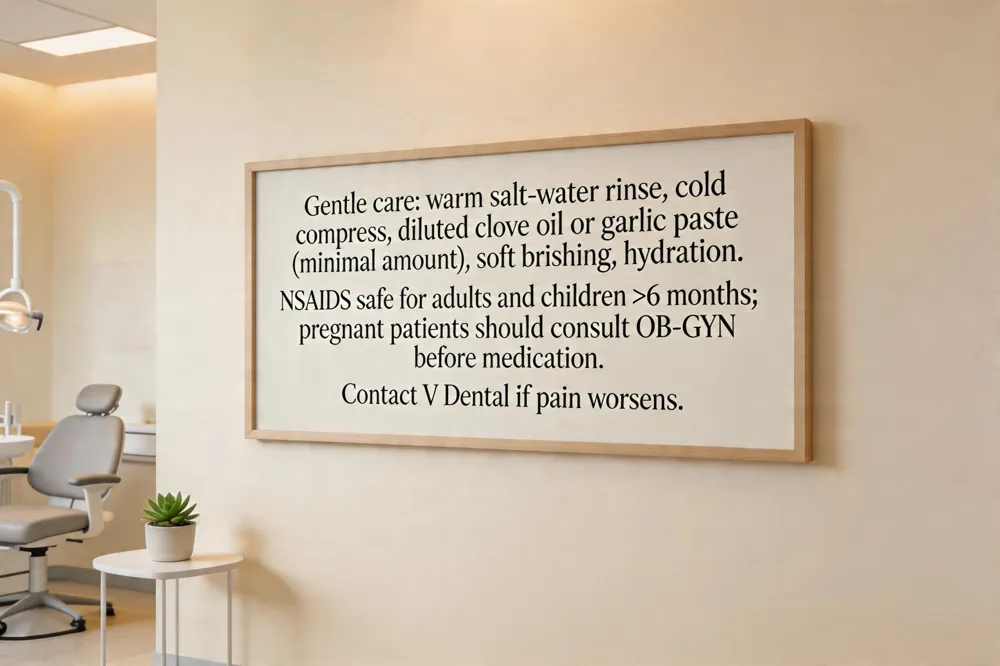 Safe home care for pregnant patients focuses on gentle, non‑medicinal options. A warm salt‑water rinse (½ tsp salt in a cup of warm water) several times daily reduces inflammation and clears bacteria. Apply a cold compress or ice pack wrapped in a cloth to the cheek for 15‑minute intervals to numb pain and limit swelling. A thin layer of diluted clove oil or a crushed garlic paste can be dabbed on the sore tooth, but avoid swallowing and keep the amount minimal. Good oral hygiene with a soft‑bristled brush, fluoride toothpaste, and alcohol‑free mouthwash, plus ample hydration, helps prevent further irritation.
Gentle remedies for children start with checking for food debris and gently flossing. Use the same warm salt‑water rinse and a cold compress for 15 minutes. Older kids may tolerate a dab of diluted clove oil or a cooled peppermint‑tea bag on the affected tooth for temporary numbing.
Medication considerations: Over‑the‑counter NSAIDs such as ibuprofen are generally safe for adults and children over six months when used as directed, but aspirin should never be placed directly on gums. Pregnant patients should consult their OB‑GYN or dentist before taking any medication. If pain persists beyond one day, worsens, or is accompanied by fever, swelling, or difficulty swallowing, contact V Dental for professional evaluation.
Warning Signs and When to Seek Emergency Care
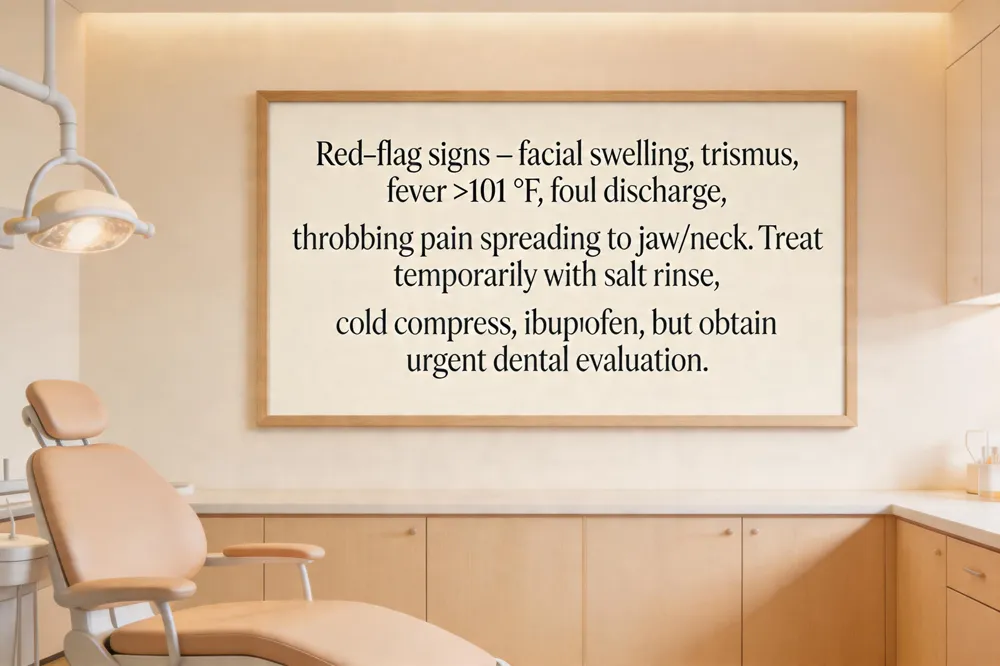 Red‑flag symptoms that signal a dental emergency include facial swelling (especially under the eye), difficulty opening the mouth, fever over 101 °F, foul‑tasting discharge, persistent throbbing pain, and swelling that spreads to the neck or jaw. These signs often accompany an abscess or deep infection that can become life‑threatening if left untreated. The most painful tooth pain is usually an abscessed tooth, where pus builds up around the root and creates sharp, constant throbbing that radiates to the jaw, ear, or neck. Relief can be achieved with a warm salt‑water rinse, a cold compress for 10‑15 minutes, and over‑the‑counter ibuprofen or acetaminophen but definitive care is required. The “3‑3‑3 rule” recommends 600 mg ibuprofen three times daily for no more than three days to control inflammation. Steps to stop nerve pain include the salt rinse, cold compress, and a desensitizing toothpaste while avoiding extreme temperatures. If any red‑flag signs appear, call V Dental or an emergency dentist right away for urgent evaluation and treatment.
Professional Care and Advanced Technology at V Dental
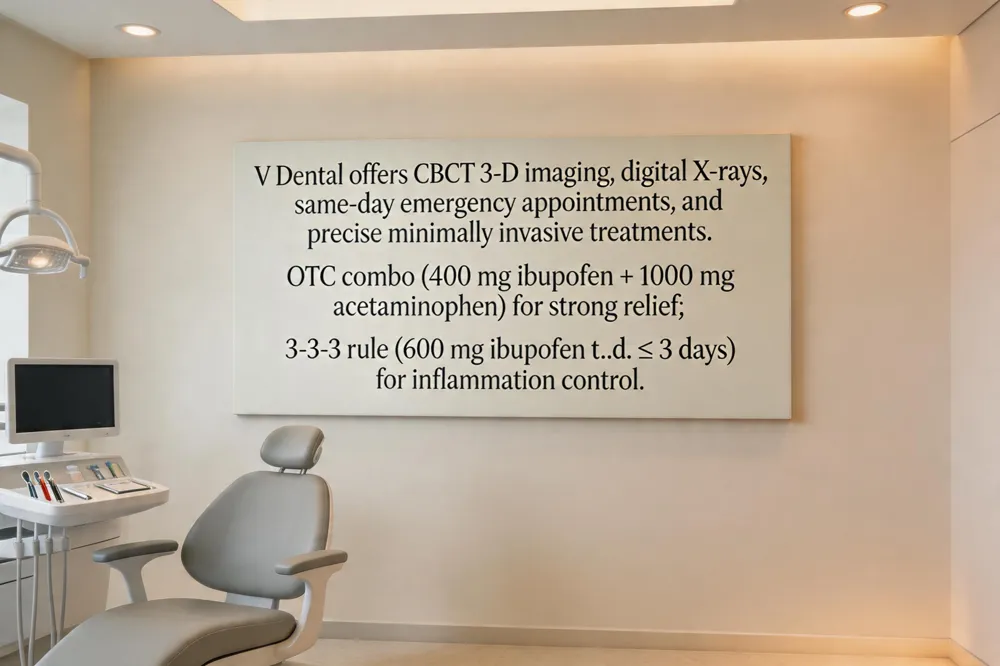 V Dental uses CBCT 3‑D imaging and digital X‑rays to pinpoint cavities, abscesses, and cracked teeth with pinpoint accuracy, enabling precise, minimally invasive treatment. The practice offers emergency appointments and same‑day care, so severe pain, swelling, or a knocked‑out tooth can be addressed within hours, often with on‑site drainage or temporary bonding. Personalized treatment plans are crafted for each patient, combining diagnostics, the treatment options, and preventive strategies.
Strongest OTC pain relief: a scheduled combo of 400 mg ibuprofen + 1000 mg acetaminophen every 6‑8 hours attacks inflammation and pain signaling for longer‑lasting relief. Immediate nerve‑pain steps: warm salt‑water rinse, 10‑15 min cold compress, ibuprofen/acetaminophen, avoid triggers. 3‑3‑3 rule: 600 mg ibuprofen three times daily, max three days, to control inflammation. Red‑flag infection signs: facial swelling, trismus, fever > 101 °F, foul discharge, spreading pain—seek urgent care. Most painful tooth pain: an abscessed tooth causes intense throbbing pain; temporary relief from cold compress, clove oil, or OTC analgesics, but definitive dental treatment is essential. Instant pain kill: cold compress or clove oil provides rapid numbing; combine with OTC pain relievers for quick comfort.
Take the Next Step With Confidence
Before you head to the dentist, remember safe at‑home steps that can calm a sudden toothache. Rinse with warm‑salt water (½ tsp salt in 8 oz warm water) to reduce inflammation and clear debris. Apply a cold compress to the cheek for 15‑20 minutes to numb pain and limit swelling. Use OTC NSAIDs such as ibuprofen or acetaminophen as directed, and consider a dab of clove oil or a cooled peppermint tea bag for brief numbing. These measures give temporary relief only; they do not treat cavities, abscesses, cracked teeth or gum disease. Persistent, worsening, or radiating pain, especially with fever, facial swelling, or difficulty swallowing, signals the need for professional evaluation. V Dental in Live Oak, Texas, offers emergency appointments, digital X‑rays, CBCT 3‑D imaging and intra‑oral cameras to diagnose. Our team, led by Dr. Brandon Villarreal, creates plans, uses modern technology, and provides flexible financing so you can receive definitive care confidently.