Welcome to V Dental’s Dental Claim Guide
This guide is designed to demystify the dental insurance process for V Dental patients, giving you confidence from preventive visits to complex restorative work. We’ll walk you through every step—verifying eligibility, obtaining pre‑authorizations, submitting claims (online or on paper), tracking status, and handling denials or appeals—so you know exactly what to expect and when. Along the way you’ll learn key concepts such as the role of CDT (Current Dental Terminology) codes, the differences between PPO, HMO, and indemnity plans, annual maximums, coinsurance, and how to use FSA/HSA funds or financing options. By the end, you’ll be equipped to maximize benefits, avoid common pitfalls, and keep your out‑of‑pocket costs predictable.
Understanding the Dental Claim Lifecycle
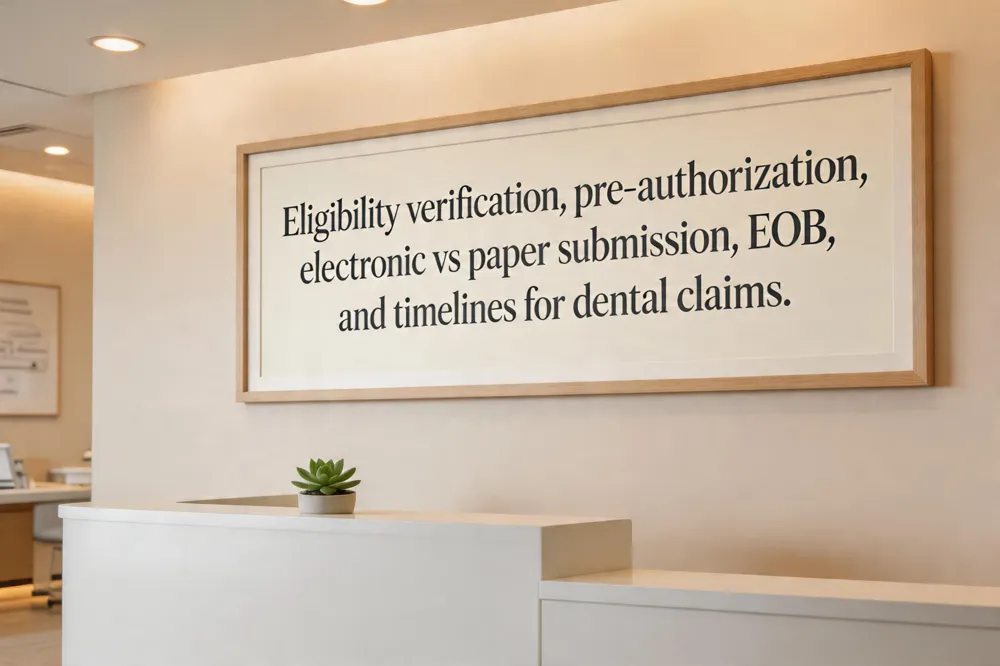 A smooth dental claim begins with eligibility verification – check the patient’s benefits, annual maximum, and any waiting periods before any procedure. If a service is high‑cost or experimental, obtain a pre‑authorization and attach a treatment plan, X‑rays, and a clear clinical narrative.
Claim submission methods vary: most offices file electronically through a clearinghouse or the insurer’s portal (e.g., MetLife MyBenefits, Aetna ClaimConnect), uploading the superbill, CDT codes, and supporting images. Out‑of‑network or indemnity plans may require a paper claim with the ADA Dental Claim Form.
After submission, the insurer issues an Explanation of Benefits (EOB) that shows the paid amount, patient responsibility, and any denial codes. Typical processing timelines are 17‑22 days for electronic PPO claims and up to 30‑45 days for paper submissions.
How to navigate the insurance claims process? Verify coverage, document the loss (photos, receipts), contact the insurer promptly, assist the adjuster, and track all communications.
Best dental insurance claim tips: confirm limits, secure pre‑authorization, submit within 30 days, use accurate CDT codes, retain all documentation, follow up on pending claims, and appeal denials with additional clinical justification.
Most common reason for a dental claim denial: a non‑covered charge, flagged by denial code PR‑96, accounting for about 35 % of all denials. Real‑time benefit checks prevent this by ensuring the procedure is covered before treatment.
Managing Denials and Communicating with Adjusters
 A denied dental claim starts with a systematic denial review process. First, read the denial letter carefully to pinpoint the exact reason—whether it is a coding error, missing attachment, frequency limit, or lack of pre‑authorization. Gather all supporting documentation: the original treatment plan, CDT‑coded superbill, diagnostic X‑rays, intraoral photos, and any clinician notes that demonstrate medical necessity.
For appeal preparation, use the insurer’s designated portal or paper form, then submit a concise, written appeal that restates the clinical rationale, corrects any errors, and attaches the gathered evidence. Keep a log of all communications, dates, and contact names, and follow up within the payer’s stipulated timeframe. If the appeal is denied, consider a peer‑to‑peer review or filing a complaint with the state dental board.
Effective communication with insurers hinges on clarity and professionalism. Stick to factual statements, avoid speculation, and never admit fault or down‑play the need for treatment.
The three D’s of insurance claims are Delay, Deny, and Defend—insurers may postpone payment, deny coverage, or require the provider/patient to defend the claim with additional documentation.
What not to say to an adjuster: do not apologize, admit liability, guess at details, or agree to recorded statements without counsel. Use only verifiable facts and let clinical and legal advisors guide your responses.
Filing Your Own Claim and Using Printable Forms
 If you receive care from an out‑of‑network dentist or the office does not file for you, you can file your own dental‑insurance claim. First, ask the dentist for an itemized invoice (superbill) that lists each procedure, the CDT code, service dates, and total charge. Then download the free printable ADA Dental Claim Form from the ADA website (search for the 2024 ADA Dental Claim Form under Forms & Resources) and fill out the header, patient details, and every service with the correct CDT code, tooth number, and fee. Attach the invoice, any required X‑ray images, and a copy of your insurance card, then submit the package within the insurer’s timely‑filing deadline—most plans allow 90 days from the date of service. For Delta Dental members, you can submit the claim online via the Delta Dental provider portal: log in, enter the patient and procedure information, upload supporting documents, and click “Submit,” noting the confirmation number. After submission, track status through the insurer’s portal or mobile app, and follow up within 24–48 hours if you see a pending or denied claim. Keeping copies of all documents and monitoring the Explanation of Benefits (EOB) will help you verify that the insurer applied deductibles, copays, and annual maximums correctly before any payment is issued.
Sample Billing Scenarios
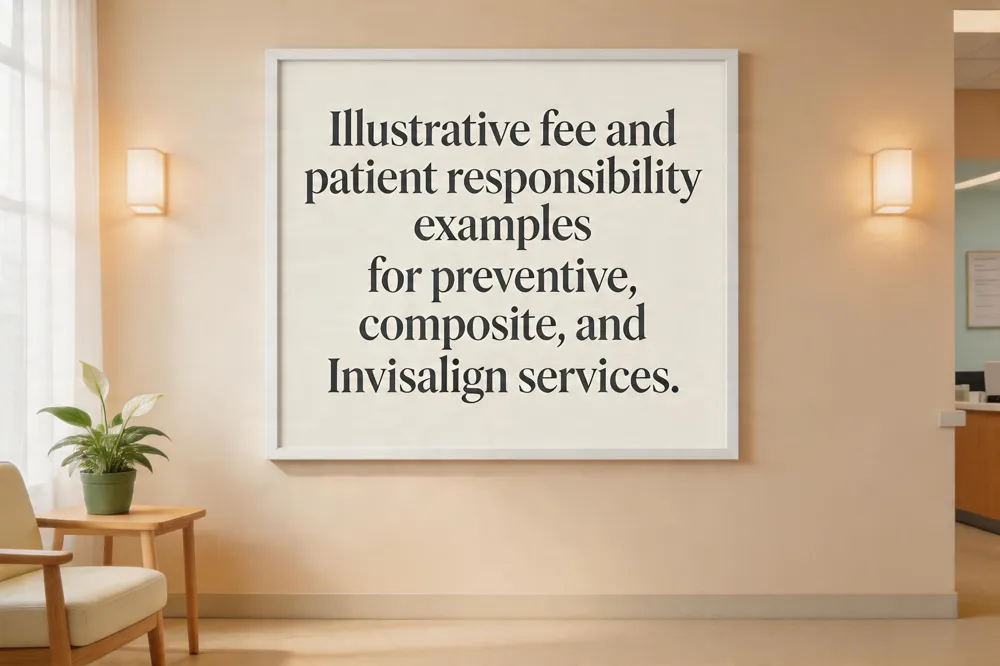 Dental billing examples
Example 1 – Preventive Visit:
- Procedure: Prophylaxis (Cleaning) – CDT D1110
- Fee: $120
- Insurance allowed (100 % coverage for preventive care): $120
- Patient responsibility: $0 (most plans cover two cleanings, one exam and one set of X‑rays per year at no cost).
Example 2 – Composite Filling:
- Procedure: Composite resin filling – CDT D2330
- Fee: $250
- Insurance allowed (80 % coinsurance after deductible): $200
- Patient responsibility: $50 (the remaining 20 % coinsurance).
Example 3 – Invisalign Treatment:
- Procedure: Clear aligner therapy – CDT D8090
- Fee: $5,000
- Insurance allowed (80 % of a $4,000 annual maximum for orthodontics): $3,200
- Patient responsibility: $1,800 (the balance after insurer payment, plus any non‑covered fees).
Understanding patient responsibility: After the insurer pays its allowed amount, the patient pays the copay, deductible, or coinsurance shown on the Explanation of Benefits. Tracking the annual maximum and using pre‑treatment estimates helps patients avoid unexpected out‑of‑pocket costs.
The 80/20 Rule and Practice Growth
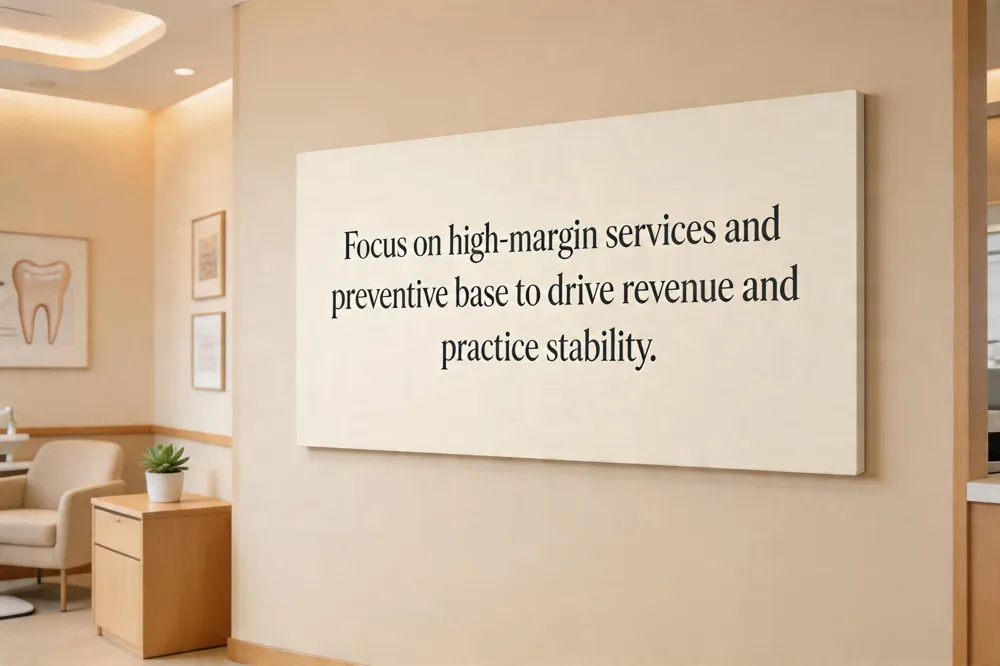 The 80/20 rule in dentistry means that roughly 20 % of your patients or services generate about 80 % of your practice’s revenue. Those high‑value cases are usually the comprehensive, cosmetic, and restorative procedures such as implants, veneers, and Invisalign that require more skill and time. By identifying and nurturing these key patients—through personalized treatment plans, seamless scheduling, and strong follow‑up—you can boost case acceptance and overall profitability without simply adding more low‑margin appointments. At the same time, protecting and expanding your hygiene recall base, which often falls in the remaining 80 % of patients, provides a stable foundation for long‑term growth. For V Dental, this strategic focus translates into allocating staff time and marketing resources toward the 20 % of high‑margin services while maintaining a robust preventive‑care program that sustains cash flow and patient loyalty. The result is higher revenue per patient, improved cash‑flow stability, and a practice that continues to deliver high‑quality, patient‑centered care.
Coverage Questions for Common Procedures
 Dental insurance typically treats wisdom‑tooth removal as a major service, so a plan can lower the out‑of‑pocket cost dramatically—often covering 70 % of the fee after any deductible. Before the extraction, verify that V Dental is in‑network and that the plan covers the specific type of extraction (simple, surgical, or impacted).
Root‑canal therapy is generally covered by MetLife’s PPO plans, with reimbursement ranging from 40 % to 80 % after the deductible. In‑network discounts further reduce the patient’s share, but remember the procedure counts toward the annual maximum (often $1,000–$2,000).
When a tooth abscess becomes an emergency, health insurance may step in if the infection is treated as a medical condition, while most dental plans also include emergency dental benefits. The dentist will determine whether to file a medical or dental claim and guide you through the process.
Many plans impose waiting periods—typically six months—for non‑preventive services like extractions or root canals, and they may require pre‑authorization for complex procedures. Check your policy’s specific limits and obtain any needed approvals before treatment to avoid unexpected costs.
In short, enrolling in dental insurance before needing major work, confirming network participation, and understanding waiting periods and pre‑authorizations are key steps to ensure the most affordable and seamless care at V Dental.
Optimizing Benefits and Reducing Out‑of‑Pocket Costs
 Take full advantage of the 100 % coverage most plans provide for preventive services—two cleanings, a comprehensive exam, and a set of X‑rays each year—because these visits cost nothing to the patient and help avoid costly restorative work later. Track your annual maximum (typically $1,500‑$2,000) and schedule major procedures, such as crowns, implants or orthodontics, soon after the benefit year resets to capture the highest possible reimbursement. Use pre‑tax Flexible Spending Accounts (FSAs) or Health Savings Accounts (HSAs) to pay for the portion of treatment not covered by insurance, effectively turning out‑of‑pocket dollars into tax‑free funds. When a large expense is anticipated, request a pre‑treatment cost estimate from your dentist; this estimate, combined with the insurer’s coverage percentages, lets you and the exact patient responsibility before work begins. Finally, consider V Dental’s flexible financing options—zero‑interest CareCredit plans, in‑house payment schedules, or short‑term loans—to bridge any remaining balance while preserving cash flow and keeping oral health on track.
Understanding Dental Plan Types and Premiums
 Dental insurance in the United States is offered mainly as three plan designs. A PPO (Preferred Provider Organization) lets patients see any dentist, but delivers larger discounts when the provider is in‑network and typically includes a deductible, coinsurance and a copay. An HMO (Health Maintenance Organization) restricts care to a network of dentists, often requires a primary dentist referral for specialists, and usually carries the lowest monthly premium and no deductible, though out‑of‑network care is only covered for emergencies. An Indemnity plan provides the most freedom to choose any dentist, but the insurer pays a fixed percentage of the billed fee and the patient bears the remaining balance, which can result in higher out‑of‑pocket costs.
Average monthly premiums in 2025 are roughly $14 for an individual HMO, $35 for a PPO, with employer‑sponsored plans slightly higher (about $17 for HMO, $29 for PPO, $36 for indemnity). Each plan sets an annual maximum—typically $1,500‑$2,000—that resets each benefit year; once reached, the patient pays all additional costs. Many plans impose a waiting period (often up to six months) before coverage of non‑preventive services such as crowns or implants becomes effective.
When a patient has multiple dental policies, coordination of benefits (COB) determines which plan pays first (the primary) and which pays any remaining eligible expenses (the secondary), preventing duplicate payments and ensuring the patient receives the maximum possible reimbursement.
Digital Tools and Technology for Streamlined Claims
 Modern dental practices rely on electronic claim submission to accelerate reimbursement and reduce manual errors. By integrating practice‑management software such as Open Dental or Flex Dental, V Dental can auto‑populate claim fields with patient demographics, CDT procedure codes, and provider NPI, then route the file through a HIPAA‑compliant clearinghouse for real‑time validation. Real‑time eligibility verification, built into these platforms, confirms coverage limits, deductibles, and pre‑authorization requirements before the appointment, preventing surprise balances. Required attachments—radiographs, intra‑oral photographs, and detailed clinical narratives—are attached directly to the electronic claim, and the system flags any missing documentation. V Dental’s advanced imaging tools, including CBCT 3‑D scans, intra‑oral cameras, and iTero 3‑D scanners, generate high‑resolution images that can be uploaded instantly, supporting the clinical necessity narrative and meeting payer requirements. This digital workflow shortens the claim cycle to within 24 hours, improves first‑time acceptance rates, and provides patients with prompt status updates via portal alerts or SMS.
Final Thoughts and Next Steps
In summary, dental insurance covers preventive care at 100 %, uses CDT codes for all services, and requires timely filing with accurate patient and provider information to avoid denials. Missing attachments, coding errors, and exceeding frequency limits are the most common reasons for claim rejection. V Dental’s staff can verify eligibility, obtain pre‑authorizations, generate detailed superbills, and submit claims electronically through the insurer’s portal, ensuring the correct CDT codes, radiographs, and clinical narratives are attached. We also help patients track claim status, interpret EOBs, and file appeals when needed. For personalized assistance, call V Dental at (830) 555‑1234, email billing@vdental.com, or visit our office in Live Oak, Texas. Our team is ready to guide you through every step of the claims process.