Introduction
Teeth whitening is a popular cosmetic procedure that uses peroxide‑based gels to oxidize stains on natural enamel, delivering shade improvements of several levels in a single office visit or with custom at‑home trays. Misconceptions linger because marketing often exaggerates results, DIY “home remedies” are shared on social media, and over‑the‑counter products contain lower‑strength agents that produce modest changes, leading users to over‑generalize. V Dental in Live Oak, Texas, counters these myths by first performing a comprehensive digital exam—using CBCT 3D imaging, intraoral cameras, and iTero scans—to ensure healthy teeth and gums, then applying FDA‑cleared, dentist‑supervised peroxide gels with protective barriers, and finally providing personalized after‑care guidance to maintain a safe, lasting smile.
Understanding Safety and Enamel Health
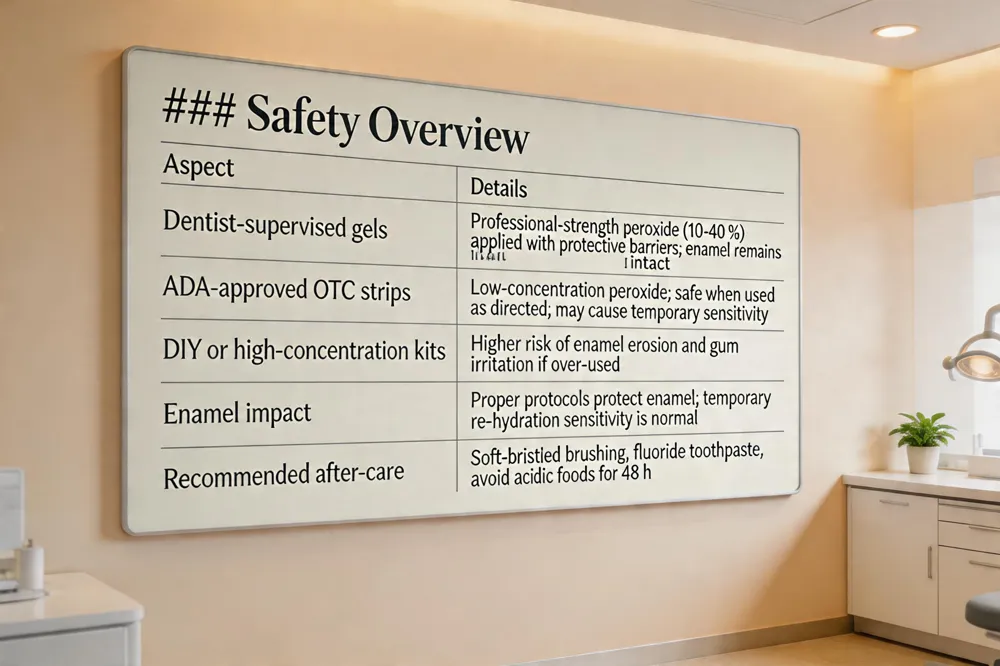
Safety Overview
| Aspect | Details |
|---|---|
| Dentist‑supervised gels | Professional‑strength peroxide (10‑40 %) applied with protective barriers; enamel remains intact |
| ADA‑approved OTC strips | Low‑concentration peroxide; safe when used as directed; may cause temporary sensitivity |
| DIY or high‑concentration kits | Higher risk of enamel erosion and gum irritation if over‑used |
| Enamel impact | Proper protocols protect enamel; temporary re‑hydration sensitivity is normal |
| Recommended after‑care | Soft‑bristled brushing, fluoride toothpaste, avoid acidic foods for 48 h |
 Is teeth whitening safe for enamel? Yes. When a dentist supervises the use of professional‑strength peroxide gels or custom‑fit trays, the bleaching agents penetrate enamel and dentin to lift stains without eroding the tooth structure. Temporary sensitivity may occur as the enamel rehydrates, but proper protocols—protective barriers, desensitizing agents, and adherence to manufacturer instructions—keep the enamel safe. Over‑the‑counter or DIY kits that are over‑used or contain high‑concentration peroxide can irritate gums and, in rare cases, weaken enamel, so professional guidance is advised.
Are there ADA‑approved teeth whitening strips? Yes. Products such as Crest 3D Whitestrips carry the American Dental Association’s Seal of Acceptance, indicating they have been evaluated for safety and efficacy when used as directed. The seal confirms appropriate peroxide levels and manufacturing standards, helping you avoid strips that could cause enamel abrasion or excessive sensitivity.
Safe ways to whiten teeth at home? Use a low‑strength peroxide toothpaste or mouthwash, follow the instructions on ADA‑approved strips, or opt for custom‑fit trays fabricated by a dentist (e.g., V Dental). Pair any method with regular brushing, flossing, and limiting stain‑causing foods and drinks to protect enamel and maintain results.
Professional vs. Over‑the‑Counter Solutions
Comparison of Whitening Options
| Option | Peroxide Strength | Typical Duration | Expected Shade Change | Cost (US$) | Safety Notes |
|---|---|---|---|---|---|
| In‑office professional | 10‑40 % (high) | 30‑min session | 2‑8 shades | 400‑800 (single visit) | Highest safety under dentist supervision |
| Custom take‑home tray (dentist) | 10‑15 % hydrogen peroxide or 35 % carbamide | 2‑4 weeks (30‑60 min daily) | 3‑5 shades | 300‑600 | Good safety; protective barriers used |
| FDA‑approved strips (e.g., Crest 3D) | 5‑14 % peroxide | 30‑60 min daily for 7‑14 days | 1‑3 shades | 30‑80 | Safe when instructions followed |
| DIY kits (non‑ADA) | Variable, often >15 % | Varies | 2‑6 shades | 20‑50 | Higher risk of misuse and enamel damage |
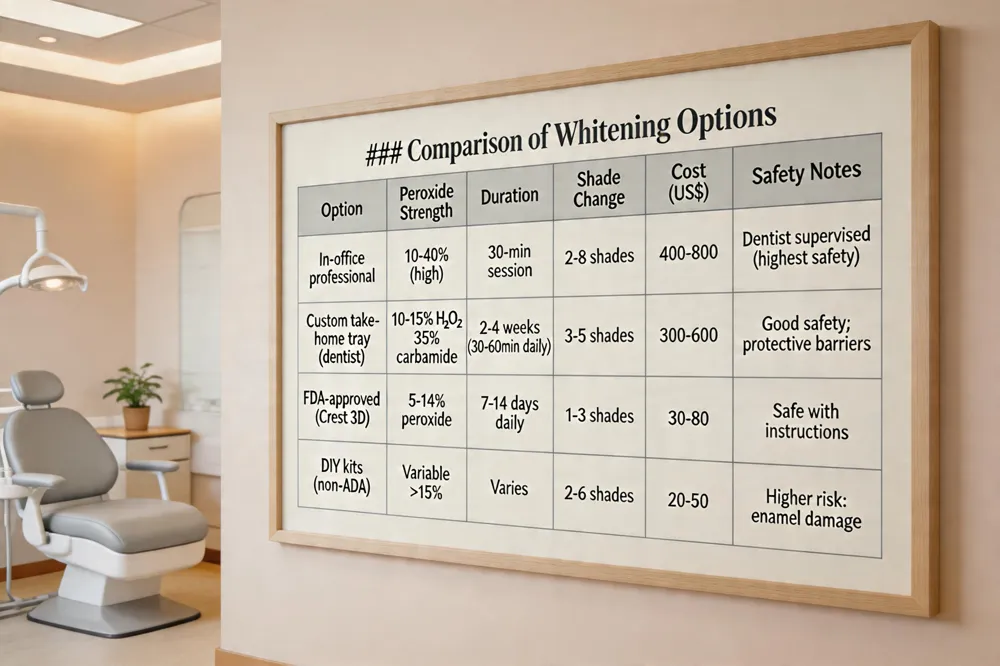 Choosing the right whitening option starts with knowing what the ADA approves, how safe strips are, and which at‑home method works fastest.
What are the best ADA‑approved teeth whitening products?
Crest 3D Whitestrips are ADA‑approved OTC kits. The line includes Glamorous White, Vivid White, Brilliance White and Sensitive‑care strips, all FDA‑cleared low‑percentage peroxide gels that protect enamel and have ratings.
Are teeth whitening strips safe?
When used as directed, OTC strips are generally safe for healthy teeth and gums. They contain low‑concentration peroxide, which may cause temporary sensitivity or mild gum irritation if the gel contacts soft tissue. Overuse can erode enamel; following instructions and consulting a dentist if discomfort persists reduces risk.
Fastest way to whiten teeth at home?
Quickest home method is a peroxide‑based strip or a dentist‑prescribed custom tray with 10‑20 % hydrogen peroxide. Applied 30‑60 minutes daily, they can lift one to two shades in 24‑48 hours. Pair with oral hygiene and avoid staining foods.
Potential Risks and How to Manage Them
Risks & Management Strategies
| Risk | Symptoms | Management |
|---|---|---|
| Tooth sensitivity | Tingling, pain to hot/cold/sweet foods | Use desensitizing toothpaste, shorten exposure, apply fluoride gel |
| Gum irritation | Redness, swelling where gel contacts soft tissue | Apply protective gingival barriers, rinse thoroughly, use lower‑strength gels |
| Enamel roughening | Slight texture change, increased porosity | Limit frequency, use remineralizing agents (CPP‑ACP, fluoride) |
| Discoloration of restorations | Crowns/veneers not affected by bleaching | Inform dentist; may need replacement after treatment |
| Allergic reaction | Swelling, itching, rash | Discontinue use, seek medical care, perform patch test before treatment |
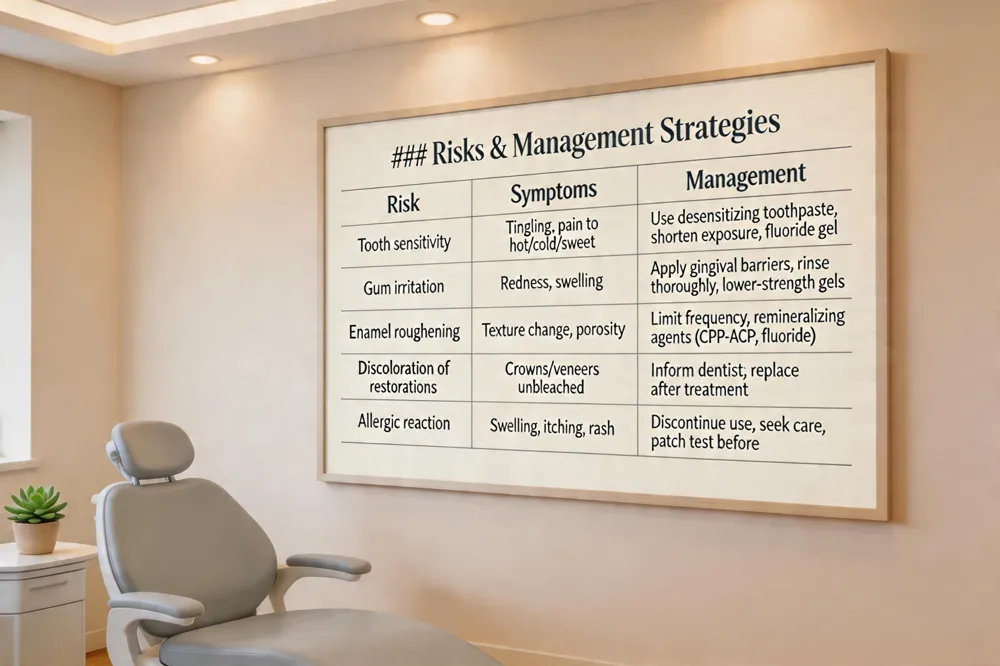 What are the risks of teeth whitening? Risks include tooth sensitivity and gum irritation, usually resolving within a few days. Stronger peroxide gels or long exposure can increase these effects. Other concerns include enamel roughening and possible discoloration of crowns or veneers. Allergic reactions are rare.
Is teeth whitening painful? It is not painful, though many feel sensitivity during or after treatment, a tingling to hot, cold, or sweet foods that fades in 24‑48 hours. Discomfort is more likely with stronger gels, over‑use of at‑home kits, or cavities. V Dental uses trays, protective barriers and desensitizing agents to reduce irritation; sensitive patients can have adjusted protocols.
How long after teeth whitening can I eat normally? For the first 48 hours enamel pores stay open, so avoid acidic foods and drinks. Choose items like rice, chicken, fish, yogurt and water. After 48 hours you may resume regular diet, but limit coffee, tea, red wine to preserve color.
Choosing the Right Method for You
Decision Guide for Choosing a Whitening Method
| Goal | Recommended Method | Key Considerations |
|---|---|---|
| Fastest, greatest shade change | In‑office professional bleaching | Higher cost, requires dental visit |
| Balanced cost & safety | Custom take‑home tray from dentist | Moderate cost, dentist supervision |
| Budget‑friendly, mild results | ADA‑approved OTC strips | Low peroxide, safe when used as directed |
| Sensitive teeth | Low‑strength peroxide toothpaste or desensitizing gels | Use for short periods, combine with fluoride |
| Minimal office visits | Custom trays with at‑home schedule | Requires initial impression appointment |
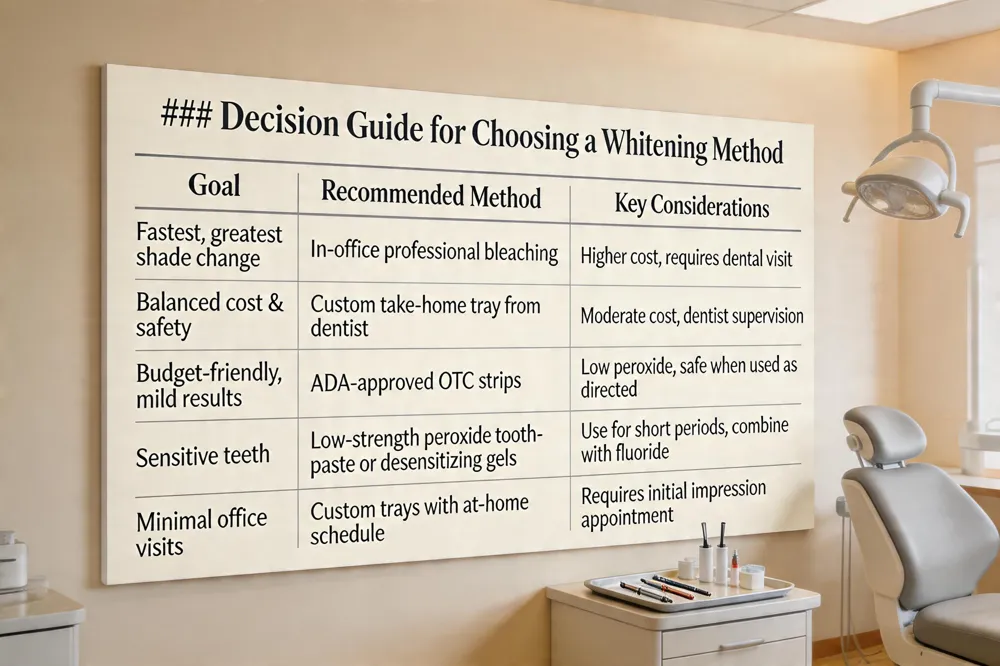 What is the most effective method of teeth whitening?
Professional in‑office whitening is the most effective, using high‑concentration peroxide gels (10‑40 %) applied under dentist supervision. A single 30‑minute session can lighten teeth 2‑8 shades safely, with barriers for gums and enamel. For results, a custom‑fit take‑home tray can be used.
What is the most effective method of teeth whitening?
Professional in‑office whitening is the most effective, using high‑concentration peroxide gels (10‑40 %) applied under dentist supervision. A single 30‑minute session can lighten teeth 2‑8 shades safely, with barriers for gums and enamel. For results, a custom‑fit take‑home tray can be used.
Best teeth whitening methods at home? Dentist‑prescribed custom trays with 10‑15 % hydrogen peroxide (e.g., Opalescence Go) provide even whitening while minimizing gum irritation. Over‑the‑counter strips such as Crest 3D Whitestrips give modest results in a week, but lower peroxide levels limit shade change. Sensitive patients should choose low‑strength gels or desensitizing toothpaste.
Best teeth whitening toothpaste? Top options include Supersmile, Crest 3D White Brilliance, and Colgate Optic White, all bearing the ADA Seal of Acceptance and containing mild abrasives or low‑peroxide formulas. For sensitive mouths, Sensodyne Extra Whitening or Arm & Hammer Advance White are recommended. Use twice daily and combine with cleanings for optimal brightness.
Cost, Longevity, and Aftercare
Cost, Longevity & After‑care Summary
| Aspect | Details |
|---|---|
| Professional in‑office cost | $400‑$800 per session |
| Custom take‑home kit cost | $300‑$600 depending on gel strength |
| OTC strip cost | $30‑$80 for a full kit |
| Longevity of results | 6 months – 3 years (depends on diet, oral hygiene) |
| Immediate after‑care (first 48 h) | Avoid acidic/colorful foods & drinks; use soft brush, fluoride toothpaste |
| Long‑term maintenance | Use whitening toothpaste, limit staining foods, regular cleanings |
| Follow‑up | Schedule ~4 months after treatment to assess and discuss touch‑ups |
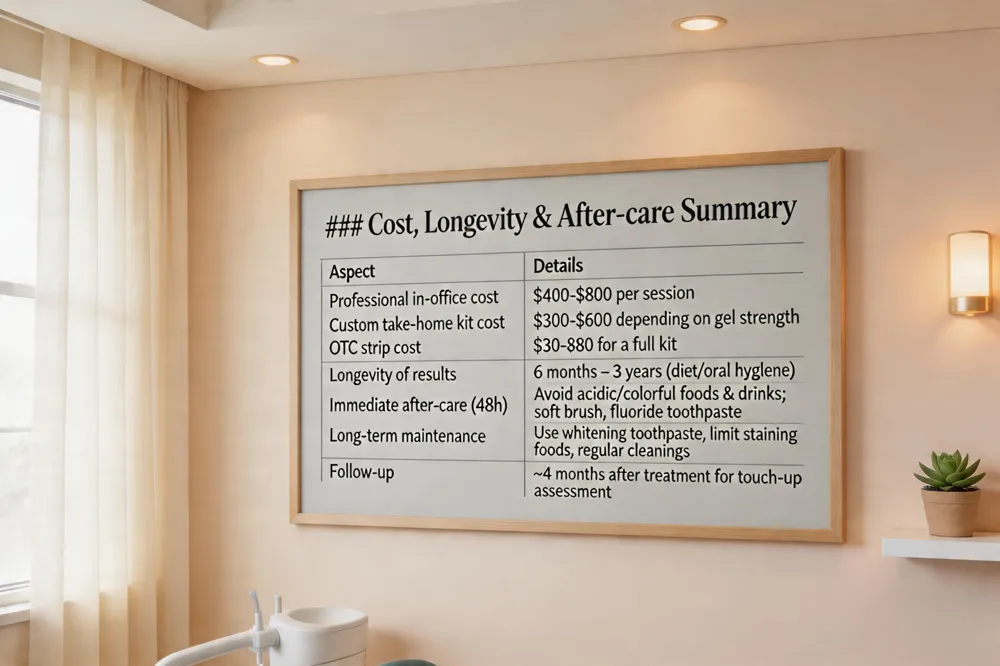 How much does professional teeth whitening cost? In‑office whitening at a dental office typically runs $400–$800 for a single visit, with many practices, V Dental reporting $450–$500. Take‑home custom‑tray kits are slightly cheaper, $300–$600, depending on gel strength and number of applications. Because whitening is cosmetic, dental insurance rarely covers it, but most offices offer financing or payment plans.
Is teeth whitening permanent? No. Results fade as stains re‑accumulate from diet, smoking, and natural enamel wear. Most patients notice a brightening that lasts 6 months to 3 years; diligent oral hygiene and a “white diet” extend the effect.
Teeth whitening aftercare (PDF) instructions: For the first 24–48 hours avoid coffee, tea, red wine, fruit juices and dark sodas; drink water, milk, or clear beverages. Use a soft‑bristled brush with fluoride or sensitivity toothpaste for at least a week, steer clear of extreme temperatures, and consider a straw for colored drinks. Apply lip balm if lips feel dry, and use OTC pain relievers for lingering sensitivity. Schedule a follow‑up in about four months to assess results and discuss touch‑up options.
Personalized Care at V Dental
V Dental Personalized Whitening Options
| Service | Description | Typical Peroxide | ---|||---| | In‑office bleaching | LED/laser‑activated high‑strength gel applied under protective shields | 10‑40 % hydrogen peroxide | | Custom take‑home tray | Dentist‑fabricated trays with gel placed at home | 10‑15 % hydrogen peroxide or 35 % carbamide peroxide | | Supervised OTC strips | Professionally guided use of ADA‑approved strips | 5‑14 % peroxide | | Gels used | Opalescence 35 % carbamide peroxide, AuraGlow 44 % carbamide peroxide | — | | Best professional method | Single in‑office session with high‑strength gel and light activation | — |
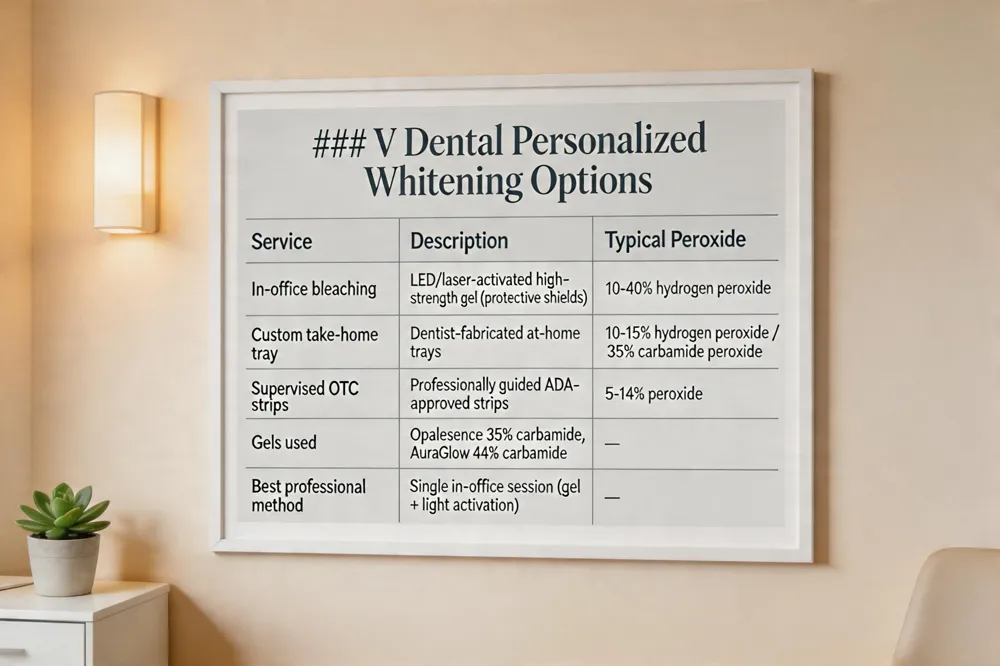 At V Dental in Live Oak, Texas , Dr. Brandon Villarreal customizes whitening for safe, effective results.
Types of teeth whitening offered by dentists?
Dentists provide three options: in‑office bleaching with high‑concentration peroxide gels activated by LED or laser for rapid shade change; take‑home kits with custom trays and lower‑strength peroxide for gradual improvement; and supervised OTC‑style strips or paint‑on varnishes for mild brightening.
Best teeth whitening gels used by dentists?
V Dental often uses FDA‑cleared Opalescence 35 % carbamide peroxide and 10‑15 % hydrogen peroxide, which balance strength and low sensitivity. AuraGlow 44 % carbamide peroxide for custom trays is another top choice.
What is the best way to whiten teeth professionally?
The most effective method is an in‑office session where a high‑strength gel is applied under protective shields and activated with a light, delivering up to ten shade improvements in one visit. A maintenance plan with regular cleanings and a whitening toothpaste helps preserve results.
Conclusion
Understanding the facts behind teeth‑whitening myths reveals that over‑the‑counter toothpastes only polish surface stains, acidic home remedies such as lemon juice can erode enamel, and professional peroxide gels—when applied under dentist supervision—are safe and can lighten teeth by several shades without damaging natural enamel. V Dental in Live Oak, Texas, employs modern diagnostics like CBCT 3D imaging and custom‑fitted trays, ensuring each patient receives a personalized, enamel‑protective regimen that respects existing restorations. Our team prioritizes safety, uses FDA‑cleared peroxide concentrations, and offers desensitizing protocols to minimize discomfort. Take the first step toward a brighter, healthier smile by scheduling a consultation with V Dental today for a truly personalized whitening plan.