Welcome to the New Era of Dental Care
V Dental in Live Oak, Texas already operates a digital workflow that includes CBCT 3‑D imaging, digital X‑rays, intra‑oral cameras and the iTero 3‑D scanner. This data foundation makes it easy to import accurate 3‑D models into augmented‑reality (AR) platforms. AR matters because it overlays those models directly onto the patient’s mouth, giving clinicians real‑time visual guidance for implant angulation, veneer preparation and orthodontic simulations. The technology also projects animated treatment previews, so patients can see expected results before any work begins, increasing confidence and consent. By combining V Dental’s existing tools with cost‑effective AR headsets or tablet apps, the practice delivers patient‑centered, transparent care while reducing chair time and improving procedural precision and clinical outcomes.
Augmented Reality: Clinical Precision and Workflow
 Implant navigation with CBCT
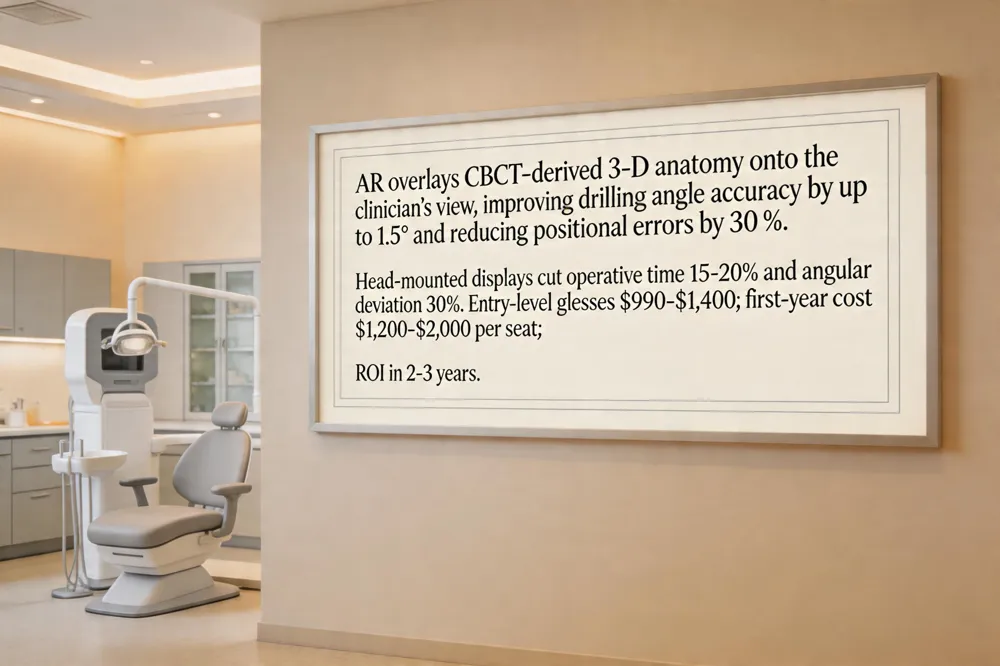
AR overlays CBCT‑derived 3‑D bone, nerve, and root data onto the clinician’s view, letting the dentist see exact anatomy in real time. Studies show AR‑guided implants improve drilling angle accuracy by up to 1.5° and reduce positional errors by 30 % compared with free‑hand techniques.
Real‑time surgical guides
Head‑mounted displays (e.g., Microsoft HoloLens, Magic Leap) project virtual guides directly onto the patient’s mouth, eliminating the need to look away from the operative field. A 2022 systematic review reported a 15‑20 % reduction in operative time and a 30 % drop in angular deviation.
3‑D printed patient‑specific guides
AR visualizes the planned guide before it is fabricated, streamlining the workflow. Combining AR with CAD/CAM and 3‑D printing creates precise, on‑site surgical guides, lowering material waste and chair‑time.
Cost and FDA clearance
Entry‑level AR glasses cost $990‑$1,400; annual software fees bring the first‑year expense to $1,200‑$2,000 per seat. The FDA has cleared several AR devices (e.g., HoloLens‑based navigation) for clinical use, ensuring safety and efficacy. With reduced chair‑time, higher case‑acceptance, and flexible financing options at V Dental, practices can recoup the investment within two to three years.
Virtual Reality: Training, Patient Comfort and Remote Mentorship
 Virtual reality in dentistry
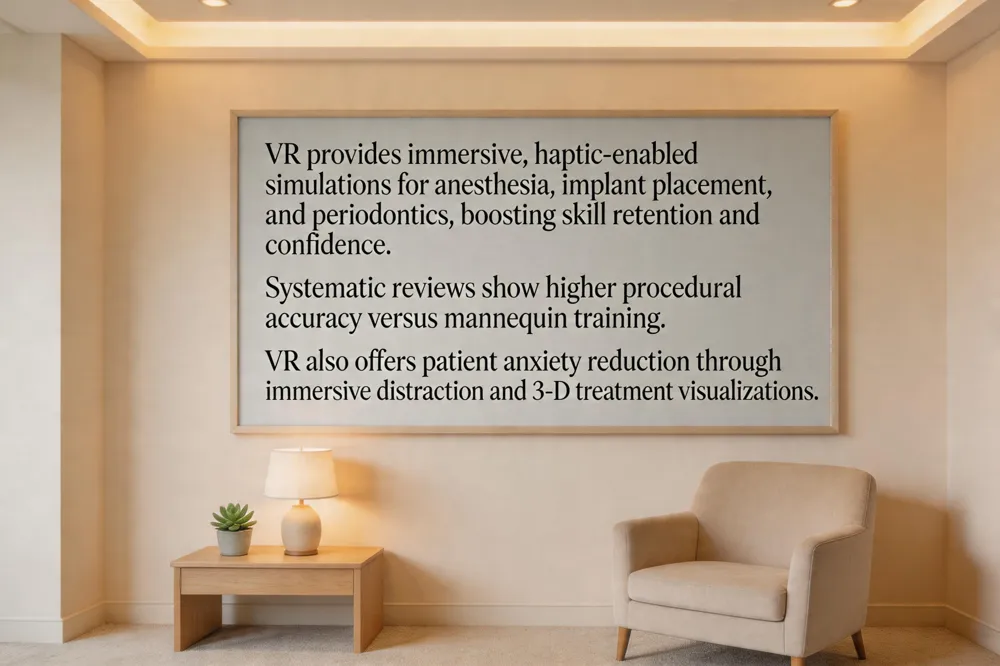
VR is reshaping dental education and practice by delivering immersive, hands‑on simulations where students and clinicians can rehearse procedures—local‑anesthesia injections, implant placement, orthodontic adjustments—without any risk to patients. The technology provides realistic visual cues and, when paired with haptic devices, mimics the tactile sensations of drilling or scaling, enabling repetitive practice that builds muscle memory much like a flight simulator for pilots. In clinical settings, VR can present 3‑D treatment plans to patients, reducing anxiety and improving informed consent.
Virtual reality in dentistry
VR is reshaping dental education and practice by delivering immersive, hands‑on simulations where students and clinicians can rehearse procedures—local‑anesthesia injections, implant placement, orthodontic adjustments—without any risk to patients. The technology provides realistic visual cues and, when paired with haptic devices, mimics the tactile sensations of drilling or scaling, enabling repetitive practice that builds muscle memory much like a flight simulator for pilots. In clinical settings, VR can present 3‑D treatment plans to patients, reducing anxiety and improving informed consent.
Virtual reality in periodontics When combined with haptic feedback, VR offers periodontics trainees lifelike simulations of gum‑tissue work such as scaling, root planing, and implant site preparation. The stylus delivers precise force sensations, allowing learners to refine fine‑motor skills. Unlimited virtual case scenarios expose students to rare or complex periodontal conditions that are rarely seen in traditional mannequin labs.
Virtual reality in dental education Systematic reviews demonstrate that VR and haptic simulators improve skill retention, confidence, and procedural accuracy over conventional mannequin‑based training. Institutions like NYU College of Dentistry employ custom VR platforms for repeated practice of core clinical tasks, accelerating the learning curve and ensuring patient safety.
Virtual reality in dentistry PDF Key PDFs include “Virtual reality (VR) applications in dentistry: An innovative technology to embrace” (Indian Journal of Dental Research, 2020) and the 2025 systematic review “Virtual Reality in Dentistry” by Wedad Saud, which discuss VR’s role in education, patient education, and anxiety reduction.
Virtual reality in dentistry PPT Presentations highlight VR’s dual benefit: enhancing professional training through immersive simulations and providing distraction‑based anxiety relief for patients during anxious appointments, thereby improving overall comfort and treatment outcomes.
AR & VR Together: Enhancing Communication and Informed Consent
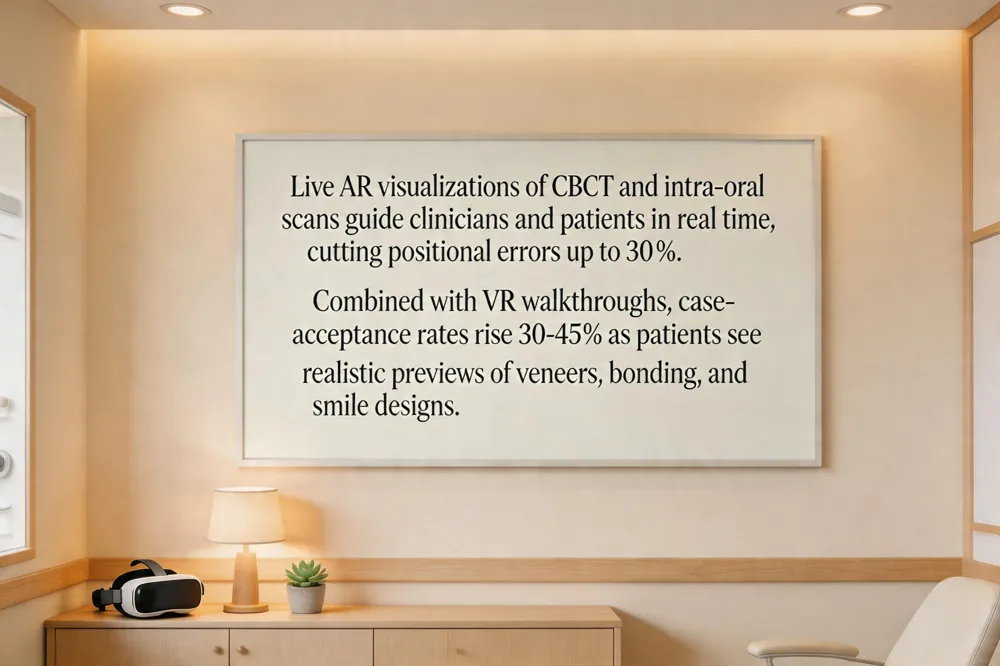 Live treatment visualizations – Augmented reality (AR) overlays 3‑D CBCT and intra‑oral scan data directly onto a patient’s mouth letting Dr. Brandon Villarreal show the exact implant trajectory, bone density, and nerve pathways in real time. This instant visual feedback guides drilling and reduces positional errors by up to 30 %.
Case‑acceptance rates – Studies consistently report a 30‑45 % boost in treatment acceptance when patients view realistic, animated simulations of veneers, bonding, or whitening. AR‑driven previews turn abstract explanations into tangible expectations, lowering anxiety and improving informed consent.
Cosmetic dentistry previews – Using tablet‑based or headset AR, V Dental can project virtual smile designs onto a patient’s teeth, allowing instant tweaking of shade, shape, and alignment before any material is placed. The same technology can be paired with VR simulations for patients to “walk through” the post‑treatment smile in a fully immersive environment.
Hybrid AR/VR patient education – VR offers a safe, repeatable training platform for the dental team, while AR delivers patient‑focused visual cues during consultations. Together they create a seamless workflow: clinicians rehearse procedures in VR, then demonstrate live outcomes with AR, resulting in clearer communication, higher case‑acceptance rates, and a more confident, informed patient base.
Digital Prosthodontics and Restorative Workflows
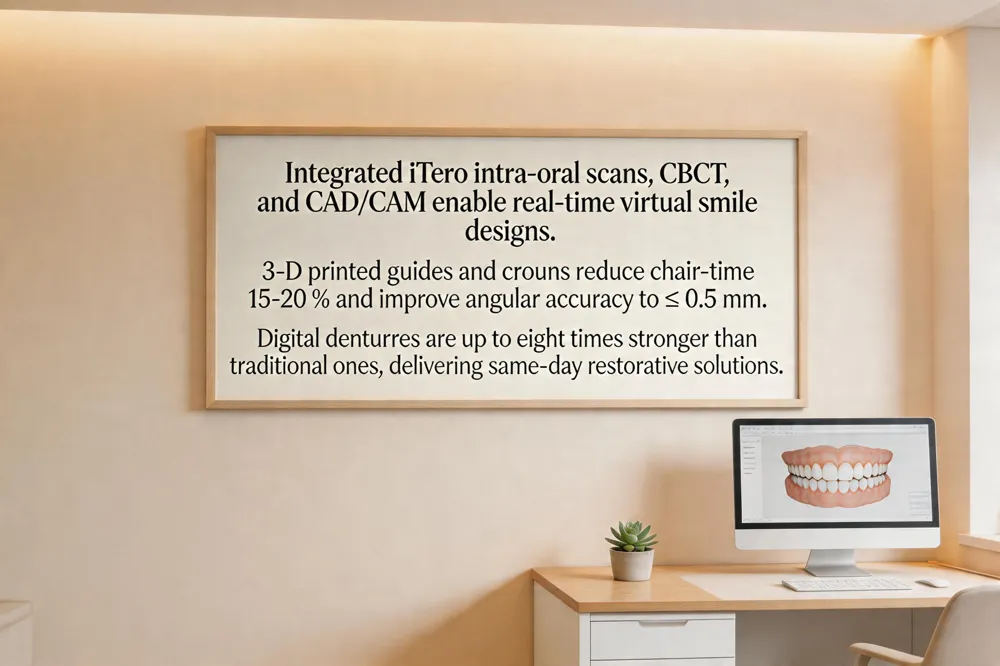 Digital dentistry has transformed prosthodontics by allowing clinicians at V Dental to capture precise iTero intra‑oral scans, merge them with CBCT 3‑D imaging, and design restorations in a CAD/CAM environment. The workflow produces patient‑specific smile designs that can be visualized in real time, enabling patients to see a virtual preview of veneers, crowns or implant‑supported frameworks before any tooth is prepared.
3‑D printing of surgical guides and definitive crowns streamlines implant placement and reduces chair‑time; studies show AR‑guided implant surgery cuts operative time by 15‑20 % and improves angular accuracy to within 0.5 mm. Digital dentures, fabricated from CAD/CAM‑designed acrylic, are up to eight times stronger than traditional dentures, allowing patients to eat comfortably and confidently.
Benefits of this digital workflow include higher marginal fit, fewer appointments, and enhanced patient education. As Dr. Brandon Villarreal notes, “Digital dentistry transforms the patient experience, turning every scan into a personalized roadmap to a healthier smile.” V Dental’s integration of iTero scanning, CBCT, and 3‑D printing delivers precise, same‑day restorative solutions that meet modern expectations.
Emerging Frontiers: Regenerative and Endodontic AR
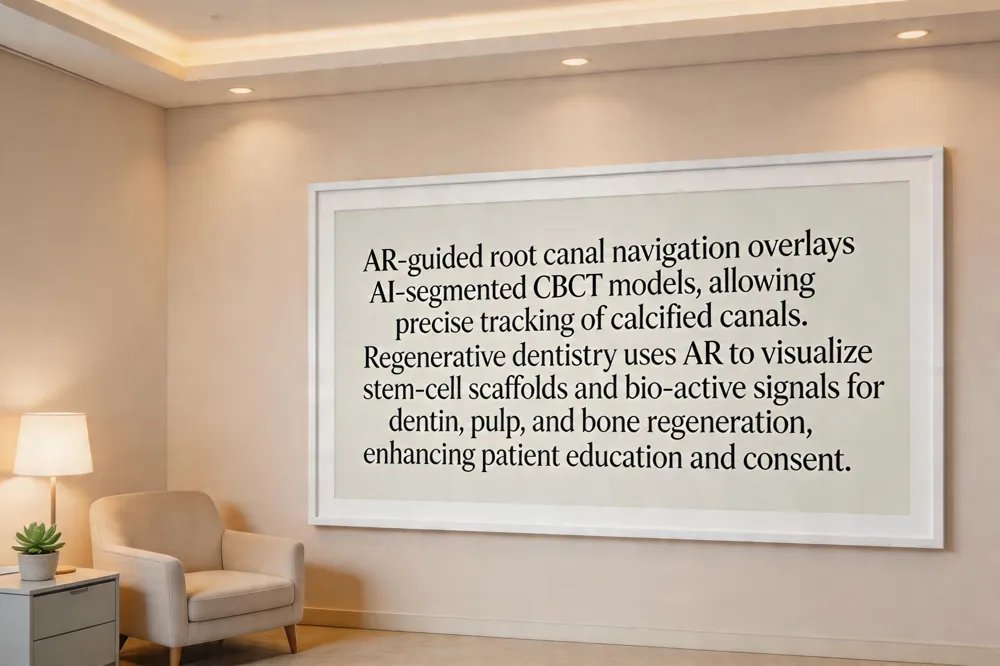 Regenerative dentistry seeks to rebuild lost tissues using stem‑cell‑based tissue repair, bioactive signals and 3‑D scaffolds that can generate new dentin, pulp or bone. In endodontics, AR‑guided root canal navigation overlays AI‑segmented CBCT models onto the clinician’s view, allowing real‑time tracking of calcified canals and precise instrumentation. Aesthetic planning often follows the 50‑40‑30 rule, allocating 50 % of smile width to central incisors, 40 % to laterals and 30 % to canines for harmonious proportions. Cultural insights reveal that while some Amish families access modern dental care, many experience poor oral health due to limited services and non‑fluoridated water. Overall, AR enhances patient education by projecting realistic treatment simulations, boosting understanding and consent.
Practical Considerations for Implementing AR/VR at V Dental
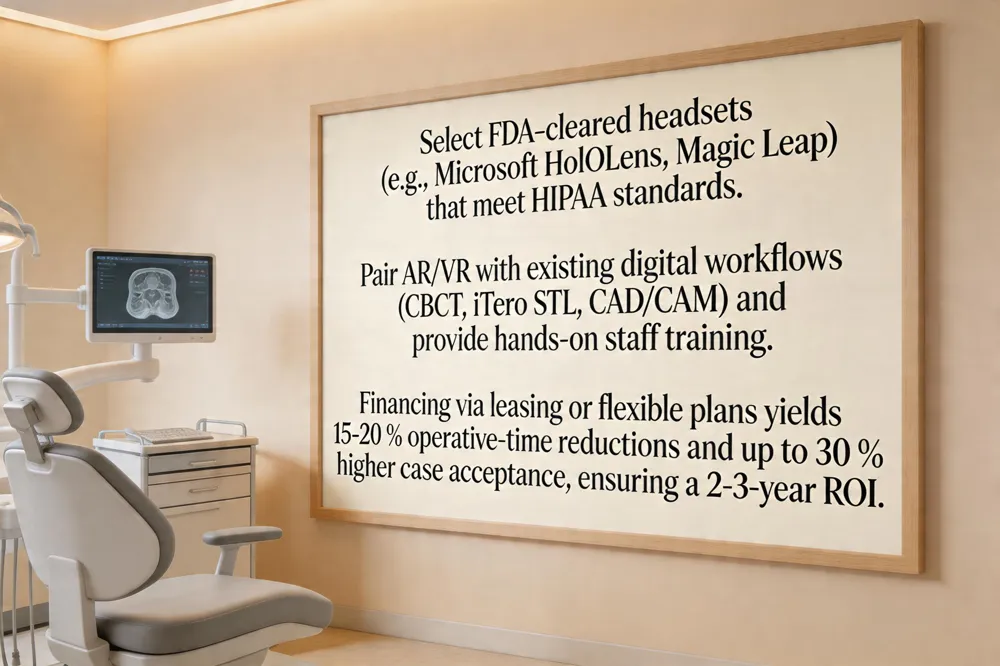 Hardware and software selection should focus on FDA‑cleared headsets such as Microsoft HoloLens or Magic Lens and tablet‑based AR apps that can import iTero STL files and CBCT DICOM data. Ensure the platform meets HIPAA standards for encrypted storage of patient scans. Financing can be structured with flexible payment plans or leasing; ROI is demonstrated by studies showing 15‑20% reductions in operative time and up to 30% higher case acceptance. Staff training must include hands‑on workshops that pair AR guidance with existing digital workflows (CBCT, digital X‑rays, intra‑oral cameras). The latest innovation reshaping dentistry in 2026 is AI‑driven diagnostics integrated into a fully digital workflow, confirming that digital dentistry is indeed the future. Digital dentistry topics span AI image analysis, CBCT 3‑D imaging, intra‑oral scanning, CAD/CAM, and 3‑D printing. Clinicians can enroll in digital dentistry courses that teach chair‑side design and fabrication. For deeper insight, the PDF "Virtual reality (VR) applications in dentistry: An innovative technology to embrace" (July 2020, Indian Journal of Dental Research) is available for download.
Looking Ahead: A Seamless, Patient‑Centric Future
V Dental is charting a roadmap for integrating augmented and virtual reality into every stage of patient care. Within the next year the practice will pilot headset‑based overlays that align iTero scans and CBCT data, allowing patients to see a live 3‑D preview of veneers, implants or Invisalign before any tooth is touched. Ongoing clinician training will be supported by AR‑driven simulation modules, ensuring the team stays at the forefront of digital dentistry and that new hires quickly master complex workflows. We invite families in Live Oak and surrounding communities to schedule an AR demonstration, where they can explore personalized treatment options and experience the confidence that comes from seeing their smile right now today.