Setting the Stage for Cavity Prevention
Dental caries afflicts 60‑90 % of the global population, making it the most common chronic disease, especially among children in the United States. Over the past decades, community water fluoridation has been hailed as a public‑health triumph; adding 0.7 ppm fluoride to municipal water reduces decay by roughly 25 % and is recognized by the CDC and WHO as one of the ten great public‑health achievements of the 20th century. Modern dental offices build on this foundation by delivering high‑concentration topical fluoride—varnish, gel, foam, or rinses—during routine cleanings. Practices such as V Dental in Live Oak, Texas, use digital X‑rays, intra‑oral cameras, and 3‑D imaging to identify high‑risk sites and apply fluoride varnish or gel in just a few minutes, typically twice a year for most patients and more often for those at elevated risk. Combining community water, daily fluoride toothpaste, and office‑based applications creates a layered defense that dramatically lowers cavity incidence while preserving natural tooth structure.
How Fluoride Treatments Work
How Fluoride Treatments Work – Key Mechanisms
| Mechanism | Description |
|---|---|
| Inhibit demineralization | Lowers plaque fluid acidity, reducing enamel dissolution. |
| Promote remineralization | Supplies calcium & phosphate to rebuild weakened enamel. |
| Antimicrobial action | Suppresses Streptococcus mutans and other acid‑producing bacteria. |
| Formulation | Concentration (ppm) | Typical Application | Duration on Tooth |
|---|---|---|---|
| Varnish | ~22,600 ppm (5 % NaF) | Applied after cleaning; adheres for several hours | Slow release over 4–6 h |
| Gel / Foam | 5,000–12,300 ppm | Placed in trays for 1–4 min | Rapid high‑dose exposure |
| Mouth rinse (daily) | 230 ppm | Rinse 30 sec daily | Short‑term increase in plaque fluoride |
| Mouth rinse (weekly) | 900 ppm | Rinse 30 sec once a week | Short‑term increase in plaque fluoride |
Immediate effect: Hardening of outer enamel. Long‑term benefit: Sustained resistance to acid attacks and reduced cavity incidence.
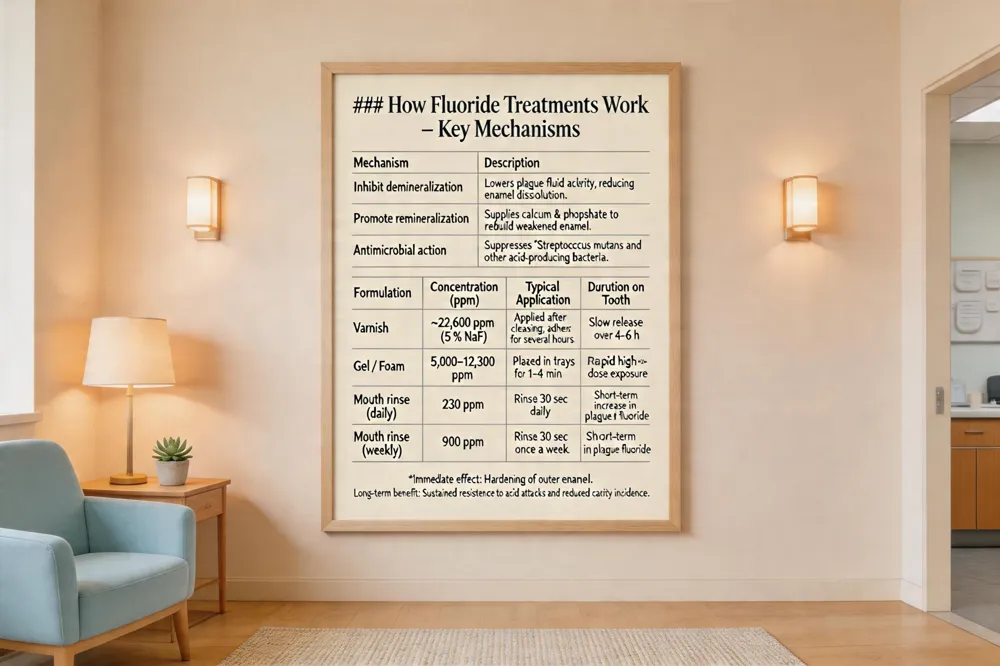 Fluoride treatments protect teeth by delivering a high‑concentration mineral directly to the enamel surface. The topical mechanisms are threefold: they inhibit demineralization by lowering the acidity of plaque fluids, they promote remineralization by supplying calcium and phosphate that rebuild weakened enamel, and they exert antimicrobial action that suppresses Streptococcus mutans and other acid‑producing bacteria. Different formulations achieve these goals in slightly different ways. Varnish is a sticky, 5 % sodium‑fluoride coating that adheres for several hours, providing a slow release of fluoride to both crown and exposed root surfaces. Gel and foam are placed in trays for 1–4 minutes; they contain 5,000–12,300 ppm fluoride and give a rapid, high‑dose exposure that is especially useful for high‑risk patients. Mouth rinses (230 ppm daily or 900 ppm weekly) raise plaque fluoride levels but are less concentrated and are not advised for children under six. The immediate effect is a hardening of the outer enamel, while the long‑term benefit is sustained resistance to acid attacks and reduced cavity incidence. At V Dental we apply varnish or gel after cleaning, allowing the fluoride to soak in and provide protection.
Professional Fluoride vs Over‑the‑Counter Products
Professional vs. Over‑the‑Counter Fluoride
| Product Type | Fluoride Concentration (ppm) | Typical Use | Reported Caries Reduction |
|---|---|---|---|
| Toothpaste (OTC) | 1,000–1,500 | Twice‑daily brushing | ~14 % reduction |
| OTC Mouth Rinse (daily) | 230 | Daily rinse | Modest benefit |
| OTC Mouth Rinse (weekly) | 900 | Weekly rinse | Modest benefit |
| In‑office Varnish | ~22,600 | Applied 2× / yr (low risk) to 4 × / yr (high risk) | 30–40 % (children), 20–30 % (adults) |
| In‑office Gel/Foam | 5,000–12,300 | 1–4 min tray application | Same as varnish; high‑dose exposure |
Frequency Recommendations
- Low‑risk: 2× / yr
- Moderate‑risk: Quarterly
- High‑risk (dry mouth, orthodontics, recurrent cavities): Every 3–4 months
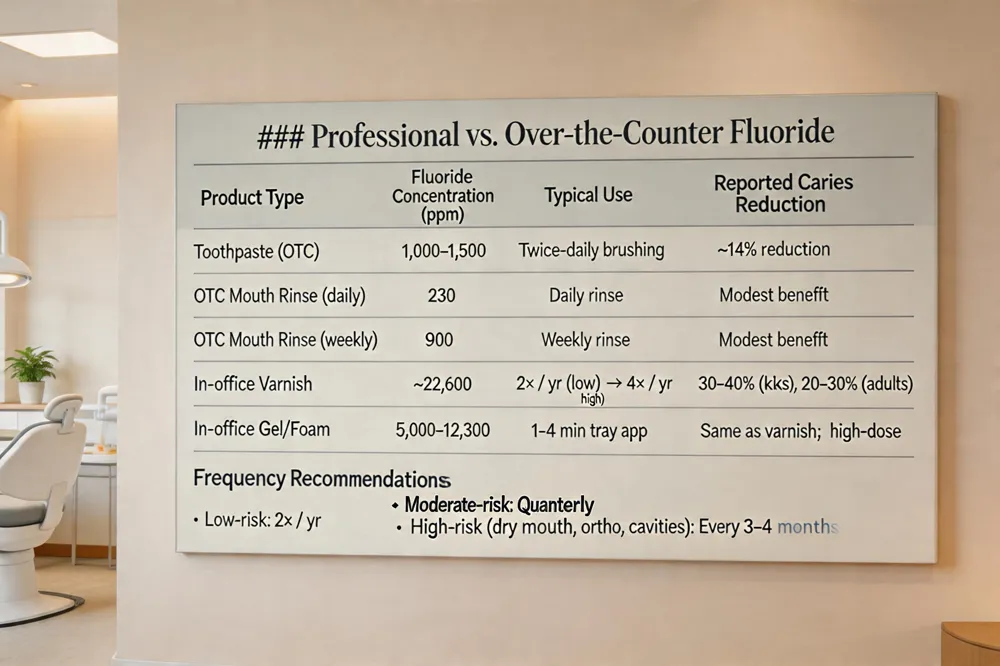 Topical fluoride products vary widely in concentration. Standard toothpaste contains 1,000–1,500 ppm fluoride, while over‑the‑counter mouth rinses range from 230 ppm (daily use) to 900 ppm (weekly). In‑office varnish delivers about 22,600 ppm and gel or foam can reach 5,000–12,300 ppm, providing a much higher dose that stays on the tooth surface for several hours. Clinical studies consistently show that these high‑concentration professional applications cut new caries incidence by 30–40 % in children and 20–30 % in adults, far exceeding the roughly 14 % reduction seen with twice‑daily toothpaste alone. Frequency recommendations depend on risk: low‑risk patients are advised to receive a fluoride varnish or gel twice a year; moderate‑risk individuals benefit from quarterly applications; high‑risk groups (e.g., those with dry mouth, orthodontic appliances, or a history of frequent cavities) may need professional fluoride every 3–4 months.
Are fluoride treatments worth it at the dentist? Yes—professional fluoride treatments are a worthwhile addition to any dental preventive plan. The concentrated gel, foam, or varnish applied at V Dental quickly strengthens enamel, reducing the risk of cavities by up to 25 % for both children and adults. The procedure is painless, takes only a few minutes, and is safe when administered by a trained clinician. Compared with the cost and discomfort of fillings, crowns, or root canals, the modest price of a fluoride treatment (often covered by insurance) offers excellent value. V Dental recommends it for patients of all ages, especially those with braces, dry mouth, frequent snacking, or a history of decay.
Cost and Insurance for Fluoride Applications
Cost & Insurance Overview
| Item | Typical Cost (USD) | Insurance Coverage | Annual Cost (4 visits) |
|---|---|---|---|
| Professional Fluoride Treatment (gel/foam/varnish) | $20–$50 per visit | Often partially covered; varies by plan | $80–$200 |
| OTC Toothpaste | $3–$6 per tube | Not applicable | – |
| OTC Mouth Rinse | $5–$10 per bottle | Not applicable | – |
Financial Benefits
- Preventive fluoride can cut future restorative costs by 30–50 %.
- V Dental offers flexible financing, membership plans, and often works with major insurers to reduce out‑of‑pocket expenses.
- Long‑term savings translate into thousands of dollars over a lifetime by avoiding fillings, crowns, and extractions.
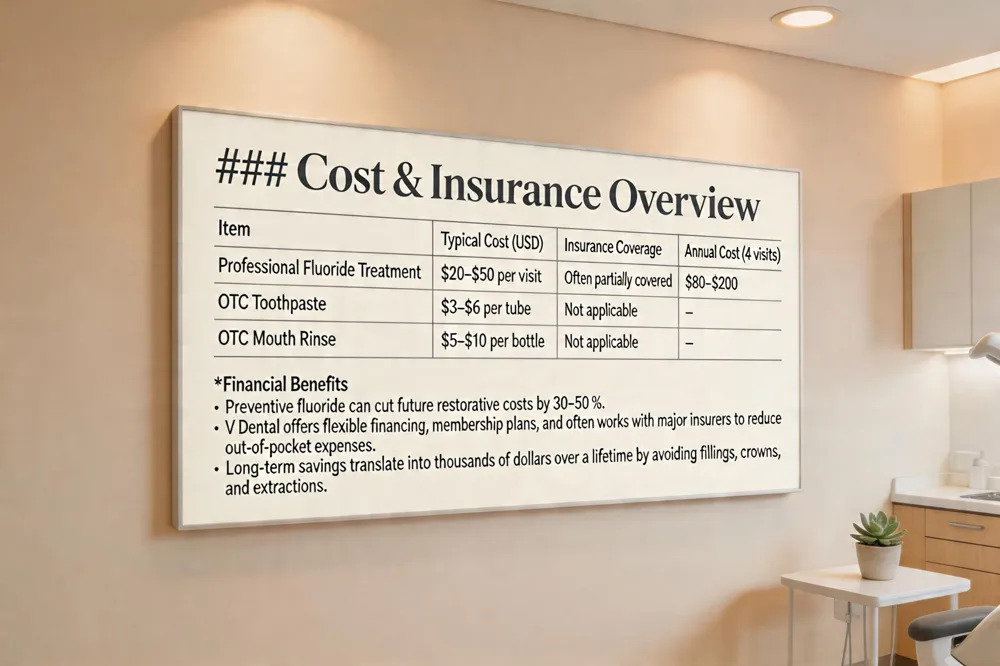 Insurance coverage and flexible financing options at V Dental make these preventive services even more affordable. Many dental insurance plans cover a portion of the fluoride application fee, and V Dental offers flexible financing and membership plans that can reduce or eliminate out‑of‑pocket costs for families and individuals.
Long‑term savings from reduced restorative work are significant. By preventing new cavities, regular fluoride applications lower the need for fillings, crowns, or extractions, which are far more expensive and invasive. Studies show that each fluoride visit can cut future restorative costs by 30–50%, translating into thousands of dollars saved over a lifetime.
How much does a fluoride treatment cost at the dentist? At V Dental, a professional fluoride treatment typically runs between $20 and $50 per visit, depending on the specific product used and whether any insurance benefits apply. This price aligns with the national average for dental offices, where most offices charge $20–$50 for a single application of fluoride gel, foam, or varnish after a cleaning. Most patients receive the treatment every three to six months, so an annual cost is usually between $80 and $200 if four visits are scheduled. Insurance plans often cover a portion of the fee, which can further lower the out‑of‑pocket amount. The short, in‑office application takes only a few minutes and provides a high‑strength fluoride coating that helps strengthen enamel and prevent cavities.
V Dental Health & Aesthetics: A Comprehensive Preventive Practice
V Dental Preventive Services Snapshot
| Service | Technology Used | Preventive Component | Frequency |
|---|---|---|---|
| Digital Examination | CBCT 3‑D, intra‑oral camera, iTero scanner | Early lesion detection | Every visit |
| Fluoride Varnish | 5 % NaF (≈22,600 ppm) | Enamel strengthening | Bi‑annual (or as risk‑based) |
| Sealants | Thin‑film resin on pits/fissures | Mechanical barrier | Usually once per molar set |
| Oral‑Hygiene Education | Visual aids, personalized coaching | Brushing, flossing, nutrition | Ongoing |
| Cosmetic Procedures (Invisalign, veneers, whitening) | Digital smile design, laser | Aesthetic enhancement | As requested |
Key Benefits
- Integrated preventive plan reduces caries risk.
- State‑of‑the‑art imaging enables minimally invasive treatment.
- Flexible financing & convenient scheduling improve access for families in Live Oak, TX.
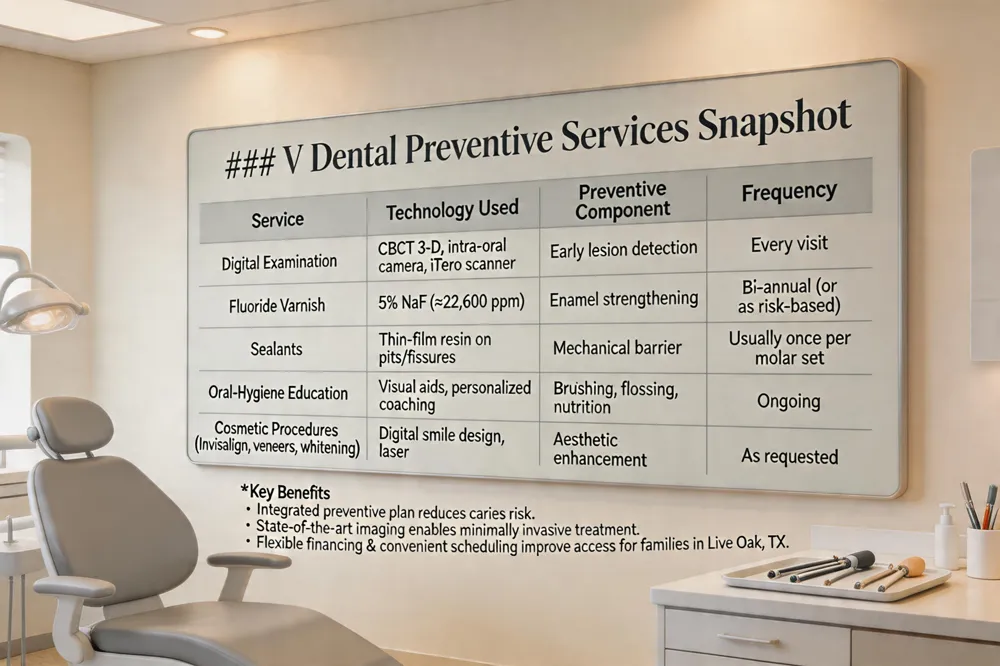 V Dental Health & Aesthetics is a family‑and‑cosmetic dentistry practice in Live Oak, Texas, that delivers a full spectrum of services ranging from routine cleanings and digital examinations to advanced aesthetic treatments such as Invisalign clear aligners, veneers, professional whitening, and dental implants. The office is equipped with state‑of‑the‑art technology—including CBCT 3‑D imaging, digital X‑rays, intra‑oral cameras, and the iTero 3‑D scanner—allowing precise diagnosis, minimally invasive procedures, and personalized treatment planning. Each patient receives a customized preventive care plan that integrates fluoride varnish applications, sealants, and oral‑hygiene education, all designed to reduce caries risk and preserve natural tooth structure. Flexible financing options and convenient scheduling make these preventive services accessible to families and individuals throughout Live Oak and surrounding communities. The practice’s commitment to modern technology, individualized care, and affordable access positions it as a trusted leader in preventive dentistry.
Preventive Dentistry for Children and Special Populations
Pediatric & Special‑Population Preventive Protocols
| Population | Fluoride Regimen | Additional Preventive Measures | Key Practice Rule |
|---|---|---|---|
| Children (general) | Toothpaste 1,000–1,100 ppm (pea‑size, twice daily) + varnish ~22,600 ppm (bi‑annual) | Sealants on molars, age‑appropriate oral‑hygiene education | 3‑3‑3 Rule – Brush 3× / day, 3 min each, no food/drink 3 h before bedtime |
| Patients with Diabetes | Same fluoride regimen; often more frequent varnish | CBCT & intra‑oral imaging for early lesion detection, coordinated medical care | Emphasize plaque control to aid glycemic management |
| High‑risk (dry mouth, orthodontics) | Increased fluoride frequency (every 3–4 months) | Saliva substitutes, meticulous flossing around appliances | Monitor acid exposure and maintain optimal fluoride levels |
Outcome Goal
- Maximize fluoride uptake → enhanced remineralization.
- Reduce cavity incidence across all ages and health conditions.
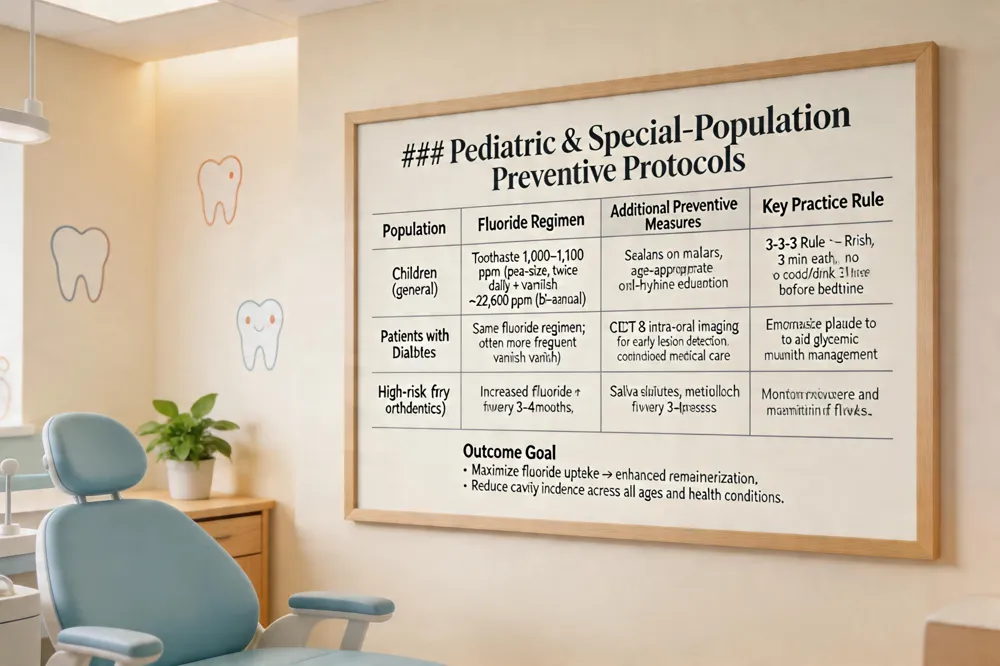 At V Dental we protect young smiles with an early‑childhood fluoride regimen that follows the evidence‑based schedule of twice‑daily brushing with a pea‑sized toothpaste (1,000‑1,100 ppm) and bi‑annual professional fluoride varnish (≈22,600 ppm) to inhibit demineralization and promote remineralization. Thin‑film sealants are placed on molar pits and fissures to create a mechanical barrier, while fun, age‑appropriate oral‑hygiene education teaches proper brushing, flossing, nutrition and habit guidance.
For patients with diabetes, V Dental coordinates care with medical providers, monitors gum health and decay, and uses CBCT 3D imaging and intra‑oral cameras to catch early lesions. Personalized preventive plans—often including more frequent fluoride applications and meticulous plaque control—help reduce periodontal complications that can exacerbate glycemic control.
The 3‑3‑3 rule simplifies optimal brushing: brush three times a day, for three minutes each time, and avoid eating or drinking for three hours before bedtime. This routine maximizes fluoride uptake, supports remineralization, and minimizes acid attacks, keeping enamel strong for all ages.
Keeping Your Smile Strong with Fluoride
Fluoride’s protective power lies in its three topical actions: it slows enamel demineralization, speeds remineralization, and curbs plaque‑bacterial activity. Daily brushing with a fluoride toothpaste (1,000‑1,500 ppm) and a community water supply of 0.7 ppm already supply low‑level protection, while professional applications—varnish, gel, or foam—deliver a concentrated dose that can reduce new cavities by 30‑40% in both children and adults. V Dental’s modern preventive program uses digital X‑rays and intra‑oral cameras to identify high‑risk sites and then applies a quick, painless fluoride varnish or gel during routine cleanings, typically every six months (more often for high‑risk patients). This approach is safe, cost‑effective, and supported by the ADA, CDC, and WHO, minimizing the need for costly restorations later. By combining at‑home fluoride use with regular V Dental visits, patients enjoy long‑term oral health, a lower risk of decay, and peace of mind that their care is both evidence‑based and affordable.