Preparation Starts Before Pain Strikes
Dental emergencies can begin without warning, and early action may reduce further damage, help prevent infection, or improve the chance of saving a tooth. Preparation starts with knowing how to reach a dental professional and what to do while arranging care.
A practical plan covers five things: contacting a dentist, easing pain or swelling temporarily, protecting an injured tooth, controlling bleeding, and keeping basic supplies such as gauze and a cold compress within reach. V Dental provides emergency care alongside family and cosmetic dentistry, so patients can ask its team about appropriate next steps for their situation.
First aid is only a bridge to professional evaluation, not a diagnosis or a substitute for treatment. If you are unsure how urgent a problem is, contact a dentist promptly; severe swelling, uncontrolled bleeding, or a serious facial injury may require emergency medical care.
Dental Emergency Guidance
- For urgent dental problems, call your dentist first for guidance and to arrange care; check whether the office provides after-hours instructions.
- Seek emergency medical care for trouble breathing or swallowing, serious facial injuries, or bleeding that will not stop; call 911 for a life-threatening emergency.
- A knocked-out permanent tooth needs immediate dental attention; aim to see a dentist within 30 minutes when possible.
- Handle a knocked-out tooth by its crown, not the root; gently rinse dirt without scrubbing, and keep the tooth moist in milk or a preservation product if it cannot be reinserted.
- Never replant a baby tooth, because this may harm the permanent tooth developing beneath it.
- For severe toothache, rinse with warm water, gently floss, and use a cold compress for cheek swelling; follow label directions for any pain reliever.
- Do not put aspirin or other painkillers directly on a tooth or gum, as they can injure gum tissue.
- Painful gum swelling, a pimple-like bump, or swelling around a tooth may indicate an abscess and warrants prompt professional assessment.
- For mouth cuts, apply clean damp gauze with steady pressure for 15 to 20 minutes; deep wounds or persistent heavy bleeding need urgent medical attention.
- A home dental kit can provide temporary support, but it cannot diagnose or treat the cause; severe pain, swelling, persistent bleeding, or a knocked-out permanent tooth requires professional care.
1. A Fast Route to Professional Dental Care
Keep your dentist’s phone number somewhere easy to find, and check in advance whether the office offers an after-hours emergency number. When a dental problem arises, call the dentist first for guidance and to learn whether an urgent appointment is available. TRICARE’s emergency dental guidance also recommends contacting a dentist promptly.
Dentists can generally assess and treat urgent tooth problems, including broken and knocked-out teeth, in the dental office. At V Dental in Live Oak, emergency care is among the services offered, alongside digital X-rays and CBCT 3D imaging that can help inform an examination.
Go to an emergency room for serious injuries such as broken facial bones, uncontrolled bleeding, or swelling that makes breathing or swallowing difficult. ER clinicians can address urgent medical needs, but they generally do not provide restorative dental treatment, so follow-up with a dentist may still be needed. If you cannot reach your dentist, seek guidance from a local emergency dental service; call 911 for a life-threatening emergency. Cleveland Clinic explains when dental problems warrant emergency-room care.
2. A Plan for Severe Pain and Swelling
For a severe toothache, rinse your mouth with warm water and gently floss to clear trapped food. If your cheek is swollen, place a cold compress against the outside of it. An over-the-counter pain reliever may help while you arrange dental care, but follow the label directions.
Do not put aspirin or another painkiller directly on a tooth or gum. The medicine can burn or injure gum tissue. First-aid steps may ease symptoms, but they do not identify or treat the cause, so contact a dentist promptly when pain is severe or persistent. Cleveland Clinic’s dental emergency guidance also advises prompt assessment.
Painful gum swelling, a pimple-like bump, or swelling around a tooth may signal an abscess. Infection can damage nearby tissues and teeth, and may spread, so seek professional care promptly rather than waiting for symptoms to settle. At V Dental in Live Oak, evaluation can include digital X-rays or CBCT 3D imaging to help assess the problem and guide a personalized treatment plan.
A mild toothache or small, painless chip may be suitable for a routine appointment. Worsening pain, new swelling, or fever changes the urgency. Call your dentist for guidance, and seek emergency medical care if swelling affects breathing or swallowing.
3. A Tooth Injury Stabilization Plan
A knocked-out permanent tooth needs immediate dental attention, but prompt, careful handling may give it a chance of being saved. The American Association of Endodontists recommends seeing a dentist within 30 minutes when possible.
Pick up the tooth by its crown, the part normally visible above the gum, and avoid touching the root. If it is dirty, rinse it gently without scrubbing or drying it. Try to place it back in its socket, but do not force it. If that is not possible, keep it moist in milk or a tooth-preservation product while contacting a dentist immediately.
Never try to replant a baby tooth, since doing so can harm the permanent tooth developing beneath it. For a cracked or broken tooth, save any fragments and rinse your mouth with warm water. If there is bleeding, apply gentle pressure with clean gauze while arranging dental care.
A cold compress held against the outside of the mouth may help ease pain and swelling. These first-aid steps are temporary; they do not replace urgent professional care. At V Dental in Live Oak, digital X-rays and CBCT 3D imaging support assessment of dental injuries, with treatment planned for the individual patient.
4. A Bleeding and Soft Tissue Response
For a cut or injury to the tongue, lips, cheeks, or gums, rinse gently with mild salt water, then press damp, clean gauze against the area. Hold steady pressure for 15 to 20 minutes, and place a cold compress on the outside of the mouth to help limit swelling and discomfort. These steps are temporary while you arrange care, as Cleveland Clinic’s dental emergency guidance explains.
Keep clean gauze in an easy-to-reach place. Avoid sharp tools and do not probe or try to repair a serious wound at home. A minor sore or small cut may only need routine dental advice, but deep injuries, heavy bleeding, or bleeding that continues despite firm pressure require urgent medical attention. Get emergency help if an injury affects breathing or swallowing. At V Dental, patients can contact the practice for guidance on dental concerns and available care.
5. A Ready-to-Use Home Dental Kit
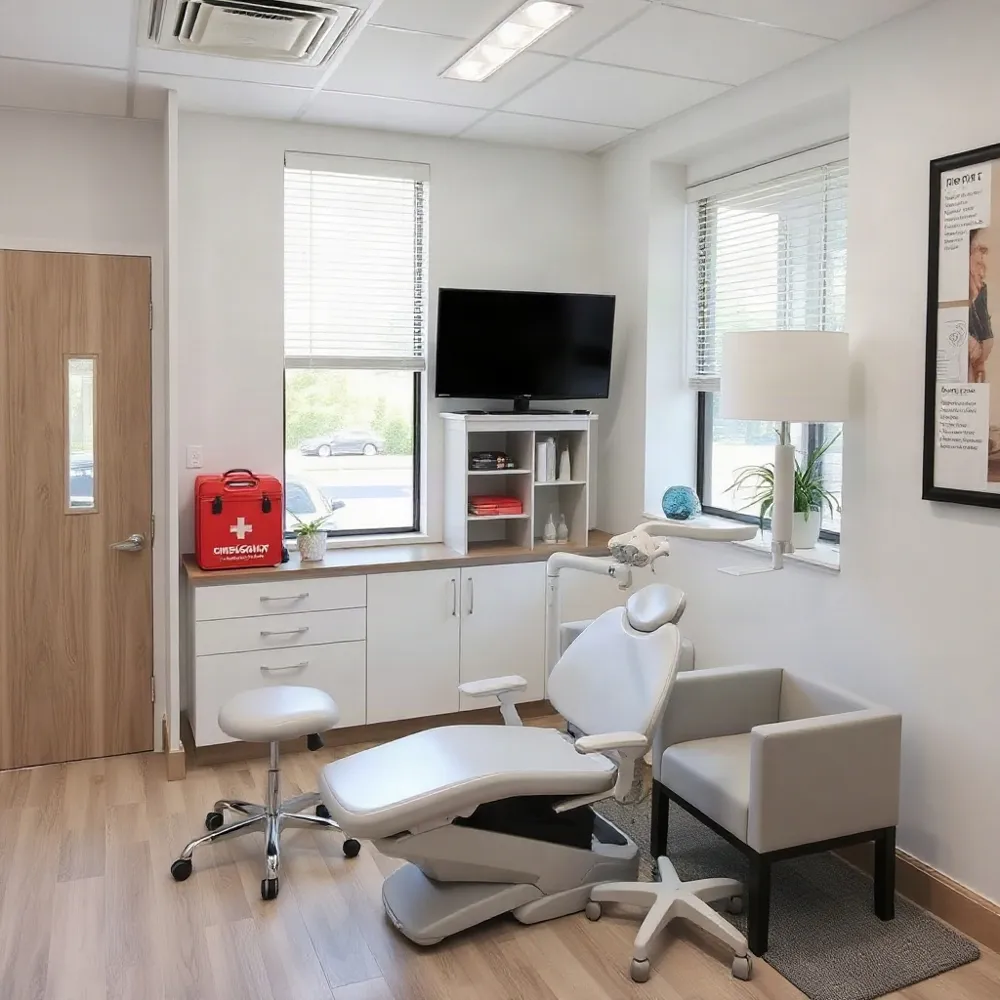 A home dental kit can help you manage a problem while arranging professional care, but it cannot diagnose or treat the cause. A basic kit can include sterile gauze, cotton swabs, dental floss, disposable gloves, a small dental mirror, salt for rinsing, and a cold compress. These supplies are also recommended in TRICARE’s dental emergency guidance.
Dental wax may cover an irritating wire or rough edge temporarily. Over-the-counter dental cement can offer short-term protection for a loose restoration when used according to its instructions. Keep a small clean container or tooth-preservation product on hand for a knocked-out permanent tooth. Milk can help keep the tooth moist while you seek urgent care, but do not delay contacting a dentist.
Store supplies in a clean, dry container that household members can find easily. Check expiration dates and replace used or out-of-date items. Follow label directions for pain relievers, and never place them directly on a tooth or gum. Severe pain, persistent bleeding, swelling, or a knocked-out permanent tooth calls for prompt professional attention, not just a kit.
For families in Live Oak, knowing how to contact a dental practice such as V Dental and where to find its emergency supplies can make it easier to take the next step. First-aid items are only a bridge to an assessment and appropriate care.
Recognizing an Emergency
 A dental emergency is a problem that needs prompt attention to relieve severe pain, control bleeding, address possible infection, or protect a tooth from further damage. A medically reviewed guide to dental emergencies describes severe toothache, damaged or displaced teeth, abscesses, and serious soft-tissue injuries among the problems that may need urgent care.
Common warning signs include a badly cracked or knocked-out tooth, a tooth pushed out of position, facial or gum swelling, and a lost or broken filling or crown that causes significant pain or exposes the tooth. A mild toothache or small chip without worsening symptoms may be able to wait for a routine appointment, but a dentist can advise based on the details.
Call your dentist first for guidance and to arrange care. Go to an emergency room for serious facial injuries, bleeding that will not stop, or trouble breathing or swallowing. V Dental provides emergency dental care alongside family and preventive services, so patients in Live Oak can contact the practice for dental concerns that need professional assessment.
When the Dental Office Is Closed
Call your dentist’s office first, even if it is closed. The voicemail or practice website may give an after-hours number or instructions for urgent problems. Many dental emergencies can be assessed and treated by a dentist, so contact the office promptly for severe pain, swelling, a badly broken tooth, or a knocked-out permanent tooth. The Cleveland Clinic’s guidance on dental emergencies also recommends calling a dentist first.
If you cannot reach your dentist, contact an emergency dental clinic or local urgent-care service for direction. Go to the emergency room or call 911 for a suspected broken facial bone, serious facial injury, deep cut, bleeding that will not stop, or swelling that makes breathing or swallowing difficult. Severe pain with facial swelling, fever, or feeling seriously unwell also warrants urgent assessment. Emergency clinicians can address immediate medical risks, but dental follow-up may still be needed.
While arranging care, place a cold compress on the outside of the cheek to help with swelling. If you take an over-the-counter pain reliever, follow its label and your clinician’s advice. Never put aspirin directly on a tooth or gum, as it can injure the tissue. At V Dental, patients in Live Oak can seek care for dental emergencies as part of the practice’s family dentistry services, alongside options such as digital X-rays and CBCT 3D imaging.
Saving a Knocked-Out Permanent Tooth
 A knocked-out permanent tooth is a dental emergency. It may be saved if you act quickly, so contact a dentist immediately and aim to be seen within 30 minutes, as the American Association of Endodontists advises.
Pick up the tooth by its crown, the chewing surface, and avoid touching the root. If it is dirty, gently rinse it with water or milk. Do not scrub it, dry it, or wrap it in tissue. If it fits easily, gently place it back in its socket and hold it in place by biting softly on clean gauze. Never force it.
If you cannot reinsert it, keep it moist in milk or a tooth-preservation kit while arranging urgent dental care. Do not replant a baby tooth, since this could harm the permanent tooth developing beneath it. If the injury also involves serious head or facial trauma, seek emergency medical care.
Managing Emergency Care Costs
If you’re uninsured, call a dentist promptly and explain your situation. Ask about the emergency exam price, a written estimate, cash-pay discounts, and payment plans before agreeing to treatment. V Dental in Live Oak offers flexible financing, which may help patients discuss payment options for care.
Ask whether the office has an in-house membership plan or accepts a dental discount plan. These plans may charge a fee and may not include every service, so check the terms and what treatment would cost out of pocket.
For lower-cost options, contact nearby community health centers, dental schools, local health departments, or charitable dental programs to ask whether they provide services and what you may qualify for. You can also check whether you or a family member may be eligible for Medicaid or CHIP, but availability and eligibility vary.
If you cannot afford the full treatment at once, ask the dentist which steps need attention first and whether care can be staged safely. Do not postpone treatment without professional guidance, because an untreated problem can worsen. Seek immediate medical attention if facial swelling affects breathing or swallowing.
Pain Relief Is Not a Diagnosis
The “3-3-3 rule” is a phrase sometimes used online for taking three 200-milligram ibuprofen tablets, three times a day, for up to three days. It is not a standardized dosing guideline, and the suggested 600-milligram dose should not replace the medicine label or a clinician’s instructions.
Ibuprofen is not safe for everyone, including some people with kidney disease or stomach ulcers, people taking certain medicines, and people who are pregnant. Follow the product directions and ask a healthcare professional if you are unsure whether it is appropriate for you.
Pain medicine may ease discomfort temporarily, but it cannot identify or treat the cause. V Dental uses digital X-rays and CBCT 3D imaging as part of its dental care, allowing a clinician to assess problems that pain relief alone cannot resolve. Arrange a dental evaluation promptly, especially if pain persists or worsens.
Seek urgent care for facial swelling or fever, and get emergency help for trouble swallowing or breathing. Cleveland Clinic’s dental emergency guidance advises prompt professional attention for severe pain and swelling.
Readiness Means Knowing When to Call
A useful emergency plan pairs accessible supplies with a clear way to reach a dental professional. Keep your dentist’s contact details handy, and know where to find basic items such as gauze and a cold compress.
First aid may ease discomfort or help limit further damage, but it cannot diagnose or resolve a serious problem. Contact a dentist promptly for severe pain, swelling, an injury, or bleeding that will not stop; seek emergency medical care for serious facial injuries or trouble breathing. TRICARE’s dental emergency guidance also stresses prompt professional attention.